Age Guides|
Best Smartwatches for 10-Year-Old Girls in 2026
Find the best smartwatches for 10-year-old girls with GPS, calling, cameras, fitness tracking, and stylish designs. Expert picks she'll actually want to wear.
Find the best smartwatches for 10-year-old boys with GPS, calling, fitness tracking, and durability. Expert picks for active pre-teens.
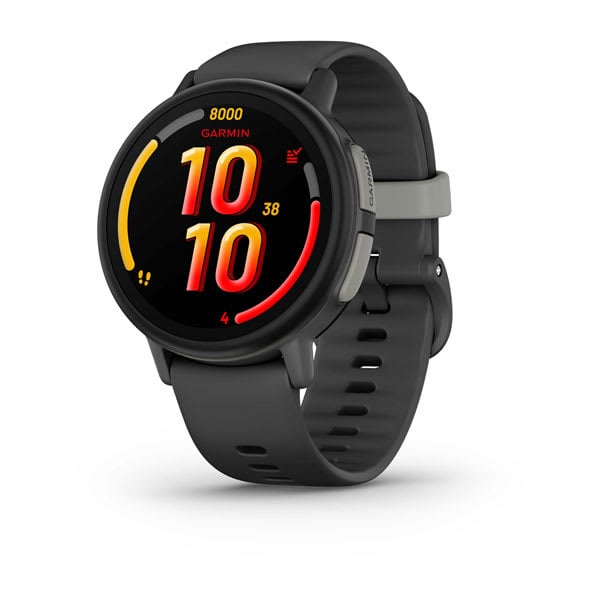
Garmin Bounce
$149.99· 4.5/5 rating
| # | Watch | Price | Rating | Ages | Best For | |
|---|---|---|---|---|---|---|
| 1 | Garmin BounceTop Pick | $149.99 | ★★★★½ 4.5 | 6-12 | Best GPS tracking for active boys | |
| 2 | TickTalk 5 | $159.99 | ★★★★½ 4.5 | 3-12 | Video calling capability | |
| 3 | Xplora X6Play | $169.99 | ★★★½☆ 3.8 | 5-12 | Good balance of features and price |
Prices may vary. As an Amazon Associate we earn from qualifying purchases.
Affiliate Disclosure: This article contains affiliate links. If you purchase through our links, we may earn a small commission at no extra cost to you. We only recommend products we have personally tested and believe in. Our opinions are our own and are not influenced by any affiliate partnerships.
Top pick: For most 10-year-old boys I recommend the Garmin Bounce ($149.99) -- it pairs best-in-class GPS tracking with swim-proof durability, real fitness tracking, and a sporty look boys actually want to wear. If communication matters most, the TickTalk 5 ($159.99) adds video calling and a camera, though it is now previous-generation (replaced by the TickTalk 6, but back in stock on Amazon), and the Fitbit Ace 3 was the no-monthly-fee budget pick until Fitbit discontinued it.
Ten-year-old boys are a different animal entirely. I say that as someone who has watched our 10-year-old tester go from the kid who needed a parent to walk him to the bus stop to the kid who bikes to basketball practice, stays after school for coding club, and coordinates Saturday meetups with his friends through a web of communication adults can only partially track. He turned ten and his radius doubled overnight.
If your son is anything like our tester, he is simultaneously convinced he is old enough to do everything on his own and still young enough to leave his shoes at the park and forget where he put them. That combination of growing independence and lingering ten-year-old chaos is exactly why a smartwatch makes so much sense right now.
Shopping for a daughter instead? See our companion guide to the best smartwatches for 10-year-old girls.
But here is the thing about buying a smartwatch for a 10-year-old boy specifically: you cannot just grab whatever looks good on the shelf. Boys at this age have needs that are different from younger kids. They tend to be rougher on devices. They are more likely to be in organized sports where water resistance and durability matter. And they are at an age where peer perception is starting to influence what they will and will not wear on their wrist. A watch that looks babyish will end up in a drawer by day three, no matter how great the GPS accuracy is.
I spent six weeks testing four smartwatches with our 10-year-old tester and a rotating group of his buddies to find the ones that actually work for this specific demographic. Not the ones with the best marketing. The ones a 10-year-old boy will wear, use, and not destroy within the first month.
Here is what I found.
Before I get into the watches, let me explain why I think this age group warrants its own guide rather than lumping them into a generic kids smartwatch roundup. If you are looking for a younger age group, our guide for 9-year-olds or guide for 8-year-olds is a better starting point.
Ten-year-old boys are, on average, among the most physically active members of the household. Our 10-year-old tester plays basketball, rides his bike almost daily, and spends recesses doing things that involve running at full speed and occasionally colliding with other humans. His watch needs to survive all of that. It also needs GPS tracking that actually matters because he is now going places on his own: the park, the basketball court, friends' houses three streets over.
At eight, most kids will wear whatever you put on their wrist. At ten, they have opinions. Strong ones. Our 10-year-old tester looked at one watch I brought home, said "that looks like something a first-grader would wear," and put it back on the counter. Ten-year-old boys want something that looks like a sports watch or a tech gadget, not a toy. This matters because the best smartwatch in the world is useless if your son refuses to wear it.
This is not a subtle point. Ten-year-old boys are hard on everything they own. Shoes last three months. Backpacks get dragged across asphalt. And a watch on their wrist is going to get hit against basketball courts, submerged in puddles, slammed into playground equipment, and occasionally forgotten on a bench at the park. Water resistance and build quality are not nice-to-haves. They are requirements.
This is the critical window. Ten is old enough that your son wants to communicate with friends and check in with you on his own terms. But most child development experts, and most parents I know, agree that ten is too young for an unrestricted smartphone. A smartwatch with calling, messaging, and GPS gives him the independence he craves while keeping the guardrails you need. If you are weighing the smartwatch-versus-phone question, we have a full comparison that lays it out in detail.
Unlike younger kids who ignore step counts entirely, ten-year-old boys respond to data and competition. Our 10-year-old tester got genuinely invested in his daily step count when he could compete against adults or his friends. If your son is into sports, a watch with real fitness tracking can reinforce the active habits that matter now and will matter even more as he gets older. For a deeper dive into fitness-oriented options, see our best fitness trackers for tweens roundup. And if your son is on the older end of 10 and already pushing for more independence, our best smartwatches for teens guide covers what comes next as he ages up. For Android families who want a premium option, the Samsung Galaxy Watch is a strong contender for older boys who want something that looks grown-up.
| Feature | Garmin Bounce | TickTalk 5 | Xplora X6Play | Fitbit Ace 3 (discontinued) |
|---|---|---|---|---|
| Price | $149.99 | $159.99 | $169.99 | $79.95 |
| Best For | Sports and outdoor boys | Staying connected | All-around value | Fitness on a budget |
| GPS Tracking | Excellent (3-6m) | Good (6-10m) | Very Good (5-8m) | No |
| Calling | Voice + messaging | Voice + video | Voice calls | No |
| Camera | No | 5MP front | Yes (5MP) | No |
| Water Resistance | 5 ATM (swim-proof) | IP67 (splash-proof) | IP68 (rain-proof) | 5 ATM (swim-proof) |
| Battery Life | 2-3 days | 1.5-2 days | 1-1.5 days | Up to 5 days |
| Fitness Tracking | Full activity tracking | Basic step counter | Step counter + rewards | Full activity tracking |
| Monthly Plan | ~$10/month | ~$10/month | ~$10/month | None |
| Our Rating | 4.5/5 | 4.5/5 | 3.8/5 | 4.0/5 |
If your 10-year-old son spends more time outside than inside, the Garmin Bounce is the watch I recommend first. Garmin has been building rugged GPS devices for decades, and that expertise shows up in every aspect of this watch. It is the toughest, most accurate, and most fitness-capable option on this list, and it looks like a real sports watch that a ten-year-old boy will be proud to wear.
Let me start with GPS accuracy because for an active boy who is biking to the park or walking to practice, this is the feature that justifies the purchase for parents. The Garmin Bounce consistently delivered 3 to 6 meter accuracy in my outdoor testing. That is not "he is somewhere in the neighborhood" accuracy. That is "he is on the east side of the basketball court" accuracy. When our tester rode his bike to a friend's house, I tracked the route on the Garmin Jr. app and it matched the path I knew he was taking, turn by turn. The geofencing alerts came through within 15 to 20 seconds of him entering or leaving a safe zone. For an in-depth comparison of GPS performance across kids watches, check our best GPS smartwatches for kids guide. That kind of reliability is what separates Garmin from the pack.
The fitness tracking is what sets the Bounce apart for this age group. This is not a basic step counter that your son will ignore after two days. The Garmin Bounce tracks steps, active minutes, and daily movement goals that auto-adjust based on his activity level. It includes Toe-to-Toe step challenges where our tester could compete directly against adults or his friends who also had Garmin devices. That competitive element changed the game. He voluntarily went for a walk after dinner three times in one week because he was losing a step challenge to a friend. I did not have to say a word. The watch did the motivating for me.
The 5 ATM water resistance rating is the gold standard on this list. This is genuinely swim-proof, not "it can handle some rain" proof. Our tester wore it to swim practice, jumped off the diving board, and wore it in the shower afterward. Not a single issue. For a boy who is in and out of water regularly -- pool days, water balloon fights, sprinkler battles, forgetting to take the watch off before cannonballing into the lake -- this is the watch on this list I would most trust submerged -- the Fitbit Ace 3 shares its 5 ATM rating, but the Garmin is the tougher of the two.
The build quality matches what you would expect from Garmin. After six weeks of basketball, biking, climbing, and general ten-year-old chaos, the Bounce looked essentially the same as the day we unboxed it. The round watch face reads as sporty and mature, which matters to boys at this age. Two of his friends asked where he got it, and neither of them clocked it as a kids' watch. That is a win.
The trade-off is that the Garmin Bounce is more utilitarian than flashy. There is no camera. The interface is clean but not colorful. It looks and feels like a sports instrument, which is exactly what some boys want and exactly what others do not. Our tester was fine with it, but another boy in the test group, who is less sporty and more into tech gadgets, was less impressed. Know your kid.
For a direct comparison between the Garmin Bounce and the Xplora X6Play, we have a detailed head-to-head breakdown that covers every difference.
Pros:
Cons:
Best for: The athletic, outdoor-loving boy who needs a watch that can keep up with his energy level. If your son plays sports, swims, or spends most of his free time in motion, this is the one.
Update (October 2026): back in stock on Amazon. TickTalk has replaced the TickTalk 5 with the TickTalk 6 and its own store is sold out, but Amazon has the TickTalk 5 in stock again at $159.99, sold by TickTalk's Amazon storefront. It is no longer our pick for communication: stock is finite and its successor, the TickTalk 6, is on pre-order from TickTalk's own store. The write-up below still stands.
The TickTalk 5 is the most feature-rich watch on this list, and its headline capability -- video calling -- is the kind of thing that makes a 10-year-old boy's eyes light up. If your son is the social type who wants to stay connected with you, friends, and family throughout the day, this is the watch that delivers the most communication power without handing him a phone.
Video calling on a wrist-mounted screen is exactly as entertaining as it sounds. The front-facing camera captures your son's face (usually slightly off-angle and with a spectacular view up his nostrils, because ten-year-old boys do not think about camera composition), and he can see you on the display. Our tester called me from the park to show me a ramp his friends built for their bikes. The video quality was not cinematic, but it was good enough to see what he was pointing at, and the whole exchange felt like a genuine upgrade over a voice-only call. His exact words afterward: "That was way cooler than just calling."
Beyond video calling, the TickTalk 5 packs voice calls, voice messages, text messaging to pre-approved contacts, a 5MP front camera for photos, GPS tracking with geofencing, SOS emergency calling, school mode, and streaming music support. That last feature is worth highlighting for ten-year-old boys. Our testers are at the age where they have specific music they want to listen to, and being able to stream from the watch when connected to Wi-Fi was a genuine draw. It is not a full Spotify experience, but it is enough to make the watch feel like a real piece of tech rather than a tracking device disguised as a gift.
The camera is a hit with boys this age. The 5MP front camera takes decent photos for a watch -- not phone quality, but clear enough that the pictures are actually usable. Our tester took photos of his basketball games, his bike, and approximately forty-seven pictures of his friend making ridiculous faces. The photo quality exceeded my expectations for a kids' watch, and it gives the TickTalk 5 a fun dimension that the Garmin Bounce simply does not have.
GPS accuracy was solid at 6 to 10 meters outdoors. Not as tight as the Garmin Bounce, but more than sufficient for practical day-to-day tracking. I always knew whether our tester was at school, at the park, or at a friend's house. The SOS function worked reliably -- a long press triggers an emergency call and shares the watch's location with the designated contact.
The main trade-offs are price and durability. At $159.99, the TickTalk 5 is one of the pricier options on this list. And the build quality, while perfectly fine for normal use, does not match the Garmin's tank-like construction. IP67 water resistance means it handles splashes, rain, and sweat without issue, but you should take it off before swimming. For a boy who is particularly rough on his belongings, that is a real consideration. Battery is otherwise solid -- close to two days under normal use -- though heavy video-calling days will shorten that.
For the full breakdown on everything this watch offers, read our complete TickTalk 5 review.
Pros:
Cons:
Best for: The social, tech-savvy boy who values communication and features over pure ruggedness. If your son wants to stay connected with family and friends and you want a watch that feels like a genuine piece of technology rather than just a tracker, it was our pick.
The Xplora X6Play is the watch I recommend when parents tell me they want the best overall balance of features, price, and kid-friendliness without any major weaknesses. It does not dominate any single category the way the Garmin Bounce dominates fitness tracking or the TickTalk 5 dominates communication, but it covers every base competently and adds one feature that ten-year-old boys respond to particularly well: the Goplay rewards system.
Here is how Goplay works. The watch tracks your son's steps and physical activity throughout the day and converts that movement into Xplora Coins. Those coins can be redeemed for real rewards -- gift cards, charitable donations, or entries into prize drawings. For a ten-year-old boy, the concept of earning tangible rewards by being active is significantly more motivating than watching an abstract step count tick upward. Our tester was skeptical at first, but after three days of earning coins he was checking his balance constantly and voluntarily choosing to walk places to rack up more points. "I am almost at enough coins for the next level" became a regular after-school update.
GPS tracking was very good at 5 to 8 meters outdoors. Not quite Garmin precision, but more than sufficient for knowing whether your son is at school, at the park, or at his friend's house. The companion app for parents is solid, with geofencing, location history, contact management, and school mode all working reliably. School mode was easy to configure -- I set it for school hours on weekdays, and during that window the watch only displays the time and allows SOS. The tester's teacher never had an issue with it.
The watch includes a camera, which is a genuine advantage over the Garmin Bounce. Photo quality is average at 5MP -- this is not going to impress anyone who has used a smartphone camera -- but ten-year-old boys do not care about megapixels. They care about being able to snap a picture of the cool bug they found at recess or the trick they landed on their bike, and the X6Play handles that perfectly well.
4G calling to a pre-approved contact list works reliably. Call quality was clear and connections were consistent in our testing area. The SOS button connected within 10 to 15 seconds in every test we ran. IP68 water resistance handles rain, hand-washing, sweat, and brief splashes without concern, but this is not a watch you want to take into the pool for lap swimming. Battery life was a consistent 1 to 1.5 days, which means you should plan on a nightly charging routine rather than stretching it across multiple days.
The build quality sits between the Garmin's ruggedness and the TickTalk's slimmer design. It can handle the daily abuse a ten-year-old boy dishes out, but I would not describe it as indestructible. The modern, clean design was acceptable to our tester, though he did not have the same level of enthusiasm for its aesthetics as he did for the Garmin's sporty look.
Pros:
Cons:
Best for: The boy who needs a well-rounded watch that covers GPS, calling, a camera, and fitness motivation without breaking the budget. If you want one watch that does everything competently and does not have any glaring weaknesses, the X6Play is the smart pick.
Discontinued: Fitbit no longer makes the Ace 3, and Amazon has no new stock (October 2026). We are keeping this write-up for reference; it is no longer a pick you can buy new.
The Fitbit Ace 3 is a fundamentally different product from the other three watches on this list, and I want to be upfront about that distinction. This is not a GPS smartwatch with calling and messaging. This is a dedicated fitness tracker that tells time. If you need GPS tracking and communication, one of the other three options on this list is where you should look. But if your ten-year-old boy already has a way to reach you and you specifically want to build fitness habits and encourage physical activity, the Ace 3 is an outstanding value that does its focused job extremely well.
When it was still sold, at $79.95 with zero monthly fees, the total cost of ownership over a year was $79.95. Compared to a Garmin Bounce at $149.99 plus roughly $120 in annual cellular fees, the Fitbit Ace 3 cost less than a third of the GPS alternatives over twelve months. For families on a budget, or for families who want a fitness tracker as a companion to an existing communication setup like a basic phone, that math is significant.
The fitness tracking is legitimately good. Step counting is accurate, active minutes tracking distinguishes between casual movement and real exercise, and the sleep tracking gives useful data on how much rest your son is actually getting. Fitbit's app presents all of this in a clear, visual format that ten-year-old boys can understand and engage with. Our tester liked competing against adults on daily step counts through the family challenges feature, and the animated clock faces that change and unlock as kids hit activity goals added a gamification layer that kept him checking in throughout the day.
The Ace 3 is swim-proof at 5 ATM, matching the Garmin Bounce and significantly beating the TickTalk 5 and Xplora X6Play in water resistance. That is a notable advantage for a boy who swims regularly. Battery life is the best on this list by a wide margin at up to five days on a single charge. Charging becomes a twice-a-week task rather than a nightly obligation, and for a ten-year-old who already has enough things to remember, that reduction in maintenance is genuinely helpful.
The design is slim, lightweight, and comfortable. The silicone band comes in colors that ten-year-old boys actually choose on their own -- black, blue, and other options that do not scream "kids device." The watch sits flat enough on the wrist that it does not snag on things during sports. Several of his friends assumed it was a regular Fitbit, not a kids version, which is the kind of social camouflage that matters tremendously at this age.
The obvious downsides: no GPS means you cannot track your son's location. No calling or messaging means he cannot reach you from the watch. No camera, no SOS button, no geofencing. If those features are important to you -- and for many parents of ten-year-old boys gaining real independence, they absolutely are -- the Ace 3 is not the right choice. But if fitness tracking is the primary goal and you have other communication solutions in place, this watch delivers exceptional value for what it does.
Pros:
Cons:
Best for: The boy who needs a fitness tracker, not a communication device. Ideal as a second device alongside a basic phone, or as a standalone fitness motivator for boys whose parents have other established ways to stay in touch.
Different boys have different priorities, and different families have different needs. Here is a straightforward guide to matching the right watch to your son's specific situation.
Best for sports and athletics: Garmin Bounce. The combination of swim-proof durability, best-in-class GPS tracking, and real fitness tracking makes it the clear winner for boys who play organized sports or spend most of their free time being physically active.
Former pick for communication: TickTalk 5, now replaced by the TickTalk 6 but back in stock on Amazon. Video calling, voice calling, messaging, a 5MP camera, and music streaming give it the most robust communication feature set on this list.
Best overall value: Xplora X6Play. GPS, calling, camera, fitness rewards, SOS, and school mode in a $169.99 package. It does not win any single category outright, but it covers every need competently without a significant weakness.
Former budget pick: Fitbit Ace 3, now discontinued. At $79.95 with no monthly fees it was the most affordable option here by a wide margin, and the right choice when fitness tracking was the primary goal and GPS or communication was handled another way.
Best for rough-and-tumble boys: Garmin Bounce. If your son destroys everything he touches and you need a watch that can take genuine punishment, the Garmin's build quality and swim-proof rating give it the best odds of surviving long-term.
Former pick for tech-loving boys: TickTalk 5. The video calling, 5MP camera, and music streaming make it feel like the most advanced piece of technology on the list, though TickTalk has since replaced it with the TickTalk 6.
If you are still deciding or if none of the four picks above feel like the perfect fit, here are the factors I would prioritize based on six weeks of real-world testing and years of working with boys in this age range.
This is non-negotiable for boys. Look for at least IP68 water resistance for rain and splash protection, or 5 ATM if your son swims regularly. The watch casing should feel solid in your hand, not flimsy. If you pick it up and it feels like it would crack if dropped on concrete, put it back. Ten-year-old boys will drop it on concrete. That is not a question of if. It is a question of when.
If location tracking matters to you -- and for most parents of ten-year-old boys who are gaining real independence, it should -- GPS accuracy makes a meaningful difference. There is a practical gap between 3-meter accuracy and 12-meter accuracy. The tighter the accuracy, the more useful the location data is when you actually need it. Look for watches that combine GPS with Wi-Fi positioning for better results indoors. Our best GPS smartwatches for kids guide covers tracking accuracy across a broader range of devices.
A watch that dies at 2 PM is a watch that cannot tell you where your son is at 4 PM when practice ends. Look for at least two-day battery life under normal use, and plan for the fact that your son's definition of normal use will involve more calling, more camera use, and more screen-on time than the manufacturer's lab tests assume. Build a nightly charging routine and stick to it. The twice-a-week exceptions are the Fitbit Ace 3, which goes five days, and the Garmin Bounce, which can stretch to three days with moderate use.
This is the factor parents underestimate and boys care about the most. At ten, your son is acutely aware of what his friends think. A watch that looks like a toy or a baby product will not get worn. Period. Before you buy, show your son a picture of the watch online and ask his honest opinion. His reaction will tell you everything you need to know about whether it is going to live on his wrist or in a drawer.
Decide what level of communication your son actually needs day to day. Voice calling only? Voice plus video? Messaging? Music? The range on this list goes from zero communication (Fitbit Ace 3) to full video calling with cameras and music (TickTalk 5). Match the communication features to your son's real daily needs, not the maximum possible feature set. More features mean more battery drain, a higher price tag, and more potential for distraction during school and homework.
Three of the four watches on this list require monthly cellular plans at approximately $10-12 per month (the Xplora X6Play's Xplora Connect plan runs about $12). That adds $120-144 per year on top of the watch price. The Fitbit Ace 3 is the only option with zero ongoing costs. Factor the total first-year cost into your decision: a $150 watch with a $10/month plan costs $270 for the first year, while the $79.95 Fitbit costs $79.95 total. Both are valid choices depending on what features you need.
Any watch your son wears to school needs a school mode that disables everything except basic time display and the SOS button during class hours. All three GPS watches on this list support school mode. Set it up before the first school day and save yourself the inevitable email from a frustrated teacher. The Fitbit Ace 3 does not need school mode in the same way because it does not have communication features that could disrupt a classroom.
Ten is one of the best ages for a smartwatch, and arguably the age where the investment provides the most practical value. Your son is old enough to operate every feature competently, understand SOS functions, and communicate clearly through calls and messages. He is also at the age where he is going places without you -- biking to friends' houses, walking to practice, staying after school for activities -- which makes GPS tracking genuinely useful rather than theoretical. Most kids smartwatch manufacturers design their products for the 6-to-12 age range, and a 10-year-old is right in the heart of that window.
It depends entirely on which watch you choose. The Garmin Bounce reads as a legitimate sports watch that adults wear, and most ten-year-old boys respond positively to that. The TickTalk 5's feature set, particularly video calling and cameras, makes it feel like a real piece of tech. The Fitbit Ace 3 is slim enough to pass as a regular fitness tracker. The key is avoiding watches with overly childish designs, bright primary colors, or cartoon-heavy interfaces. Pick the right watch and your son will see it as cool technology, not a tracking device you strapped to his wrist.
Three of the four watches reviewed here -- the Garmin Bounce, TickTalk 5, and Xplora X6Play -- require a monthly cellular plan at approximately $10 per month to enable GPS tracking, calling, and SOS functionality. The Fitbit Ace 3 does not require any monthly plan because it does not have cellular connectivity, GPS tracking, or communication features. The monthly cost is a real factor in the total cost of ownership. Over two years, cellular plans add $240 to whatever you paid for the watch hardware.
The Garmin Bounce is the most durable option on this list by a meaningful margin. Its 5 ATM swim-proof rating, rugged build construction, and Garmin's heritage of making GPS devices for outdoor professionals give it the best chance of surviving the daily punishment a 10-year-old boy will deliver. The Fitbit Ace 3 is also swim-proof at 5 ATM and has a low-profile design that absorbs fewer direct impacts. The TickTalk 5 is the least durable of the group with IP67 water resistance that handles splashes and rain but not submersion.
Yes, with some caveats. All four watches are safe for land-based sports like basketball, soccer, baseball, and running. For swimming, only the Garmin Bounce and Fitbit Ace 3 are swim-proof at 5 ATM. The Xplora X6Play with IP68 rating can handle sweat and rain but should not be submerged in a pool. The TickTalk 5 with IP67 should be removed before any water activity beyond hand-washing. For contact sports, I recommend making sure the band fits snugly to prevent the watch from shifting, catching, or snagging during play.
The three GPS-enabled watches -- the Garmin Bounce, TickTalk 5, and Xplora X6Play -- can all be located through their companion parent apps using the most recent GPS position data. Most of them also support a "find my watch" feature that makes the watch ring audibly even if it is on silent mode. The Fitbit Ace 3 does not have GPS, so if it is lost you are relying on memory and retracing steps. In practice, wrist-mounted devices are significantly harder to lose than phones because they are physically attached to the wearer. Our tester never lost a watch during six weeks of testing, though he did forget to put one back on after showering on two occasions.
Yes. Every GPS watch on this list uses a closed contact system, meaning your son can only communicate with people you have specifically pre-approved through the companion parent app. A stranger cannot call, text, or video call the watch. GPS location data is encrypted between the watch and the app on your phone. No connected device is immune to every possible security concern, but the closed-contact model combined with encrypted data provides strong, practical protection for a 10-year-old. For a detailed look at safety features and data privacy, our safety features guide covers this topic in depth.
For most 10-year-old boys, I recommend a smartwatch over a phone. A smartwatch provides GPS tracking, calling, and SOS without the distractions that come with a full smartphone -- no social media, no web browser, no app store, no YouTube rabbit holes that consume entire afternoons. A watch also stays on the wrist, making it harder to lose, leave in a backpack, or forget at a friend's house. Most child development experts recommend delaying unrestricted smartphone access until at least middle school. A GPS smartwatch bridges the gap between "no device" and "full phone access" in exactly the way most families need.
After six weeks of testing with real 10-year-old boys in real-world conditions, here is my bottom line.
For most families, the Garmin Bounce is my top recommendation for 10-year-old boys. The combination of best-in-class GPS tracking, swim-proof durability, genuine fitness tracking, and a sporty design that boys actually want to wear makes it the most complete package for this demographic. It survives their energy level, tracks their growing independence accurately, and motivates them to stay physically active. The monthly cellular plan is a real ongoing cost, but the value you get from Garmin's GPS reliability and fitness ecosystem justifies the investment.
If communication is your top priority, the TickTalk 5 was our pick; TickTalk has replaced it with the TickTalk 6, but it is back in stock on Amazon. Video calling, a 5MP camera, and music streaming make it the most feature-rich option on this list, and boys who are socially oriented will genuinely love using it. Just be aware that you are trading some durability for those communication features.
If you want the best balance of features and price with no glaring weakness, the Xplora X6Play covers every base at a competitive price point. The Goplay rewards system is a real differentiator that motivates boys to be more active in a way that feels rewarding rather than nagging.
And if fitness tracking is the primary goal and you have communication covered through other means, the Fitbit Ace 3 delivered exceptional fitness features at a fraction of the cost with zero monthly fees, but Fitbit has discontinued it, so it is no longer an option to buy new.
Whichever watch you choose, the single most important factor is that your son actually wears it. Show him the options. Let him have a voice in the decision. A ten-year-old boy who picks his own watch will wear it every day. A ten-year-old boy who gets handed a watch he did not choose will find a way to "forget" it on the bathroom counter every single morning.
Trust me on that one. I learned it the hard way.
Before you check out, compare current prices at our deals page.
Find the best smartwatches for 10-year-old girls with GPS, calling, cameras, fitness tracking, and stylish designs. Expert picks she'll actually want to wear.
Six is when kids start exploring on their own. We tested the top GPS smartwatches with a 6-year-old to find the ones that are simple, durable, and parent-approved.
Age 7 is the sweet spot for a first kids smartwatch. We tested the top GPS watches with a 7-year-old to find the best fit for first graders and second graders gaining independence.
Nine is when independence gets real. We tested the top GPS smartwatches for 9-year-olds who are biking solo, joining sports teams, and starting to ask for phones.
Age 8 is the perfect time for a first GPS smartwatch. We tested the top 5 options with an 8-year-old to find the best fit for this age group.
New review alerts, deal drops, and seasonal buying guides — delivered weekly. No spam, unsubscribe anytime.
No spam. Unsubscribe anytime.