Age Guides|
Best Smartwatches for 4-Year-Olds (2026): What Actually Works at This Age
Is 4 too young for a smartwatch? We tested 3 watches with a preschooler to find out which ones a 4-year-old can actually wear, operate, and benefit from.
Most kids smartwatches aren't designed for 3-year-olds. We tested which ones work at this age, which ones don't, and whether your toddler actually needs a smartwatch yet.

VTech KidiZoom DX3
$69.99· 3.5/5 rating
Affiliate Disclosure: This article contains affiliate links. If you purchase through our links, we may earn a small commission at no extra cost to you. We only recommend products we have personally tested and believe in. Our opinions are our own and are not influenced by any affiliate partnerships.
Top pick: If you are set on a watch for a 3-year-old, the VTech KidiZoom DX3 ($69.99) is the best option -- it has the simplest interface of any kids watch, fun dual cameras, and no monthly fee, so a destroyed toddler toy won't sting. The Garmin Vivofit Jr. 3 ($49.99) is the better choice if you want something nearly indestructible with a year-long battery and Disney character bands. Honestly, though, most 3-year-olds do not need a smartwatch yet at all.
Only two watches are worth considering at age three. Here is how they stack up at a glance.
| Watch | Price | Ages | Key Feature | Water Resistance | Best For |
|---|---|---|---|---|---|
| VTech KidiZoom DX3 | $69.99 | 4-12 | Dual cameras + simple games, no monthly fee | Splash-proof (not submersible) | Best option for 3-year-olds |
| Garmin Vivofit Jr. 3 | $49.99 | 4-9 | 1-year battery + chore/activity tracking, character themes | Swim-proof to 50m | Best fitness tracker for toddlers |
I am going to be straight with you right from the start: most three-year-olds do not need a smartwatch. I know that is a strange way to open an article on a website called SmartWatchesForKids, but I would rather be honest with you and earn your trust than push you toward a $150 gadget your toddler is going to stuff into a couch cushion within the first week.
That said, there are a handful of situations where a simple wrist device does make sense at age three. And if you have already decided you want one, I can steer you toward the only two options that are even worth considering at this age. Everything else on the market is going to be too complex, too big, or too expensive to justify strapping to a toddler's wrist.
Let me walk you through the honest picture.
The short answer is: probably not. But let me explain why, because the reasoning matters.
A three-year-old is still developing the fine motor skills needed to reliably interact with a touchscreen. They are learning to use buttons, zippers, and utensils. Most of them cannot read a single word. They have very little concept of time. They do not go anywhere unsupervised. They are with you, a daycare provider, a grandparent, or another trusted adult at all times.
The primary reasons parents buy kids smartwatches — GPS tracking, calling, and safety features — assume a level of independence that simply does not exist at three. Your toddler is not walking to school alone. They are not playing at the park while you watch from the kitchen window. They are within arm's reach of an adult during almost every waking moment.
So when someone asks me "what is the best smartwatch for a three-year-old?" my honest first answer is: the one you do not buy yet. Wait until four or five, when your child's motor skills, wrist size, and daily routine actually align with what these devices are designed for. Our guides for 4-year-olds and 5-year-olds cover those ages in detail.
But I also know that some of you are reading this because you have a specific reason for wanting a watch at three. So let me talk about when it actually does make sense.
Before I get to the exceptions, let me explain the practical problems with most kids smartwatches at this age. This is not about being a killjoy. It is about saving you money and frustration.
Wrists are too small. A three-year-old's wrist is typically 3.5 to 4.5 inches around. Most kids smartwatches, even the ones marketed for "ages 3 and up," are designed to fit wrists starting at about 5 inches. The watch face overwhelms a toddler's wrist, the band hangs loose even on the tightest setting, and the whole thing slides around and rotates until the screen is on the inside of the arm. At that point it is a bracelet, not a watch.
Touchscreens require dexterity they do not have. Swiping, tapping specific small icons, and navigating menus requires fine motor precision that most three-year-olds are still developing. You will watch your child mash the screen with their entire thumb and get frustrated when the wrong thing happens. Repeatedly.
They do not understand the concept. A three-year-old does not understand what a watch is for. They cannot tell time. They do not know what GPS means. They cannot read contact names. The watch is a toy to them, and compared to their other toys — ones with bigger buttons, simpler interactions, and more immediate rewards — a smartwatch is a confusing, fragile toy that keeps dying and needs to be charged.
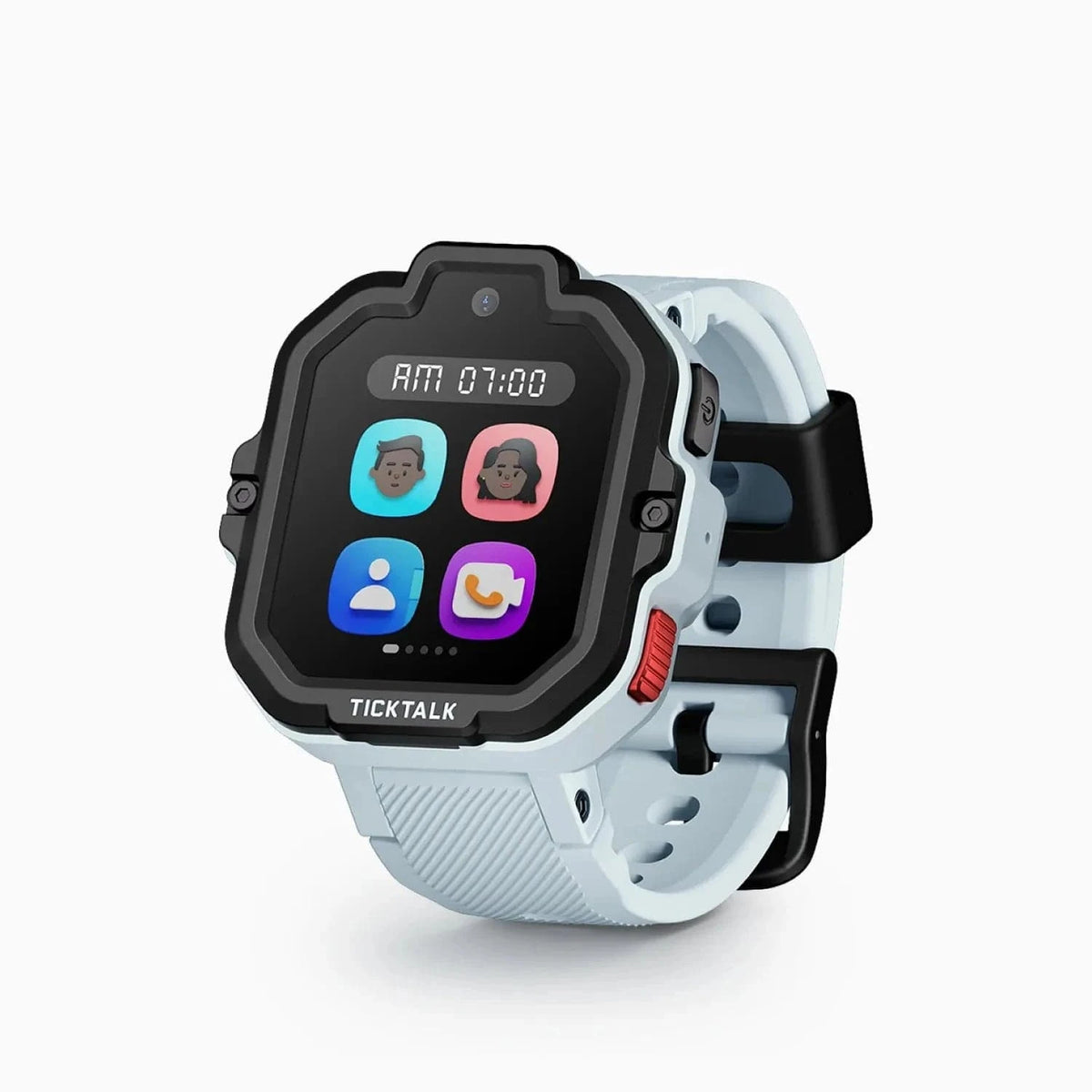
GPS watches are massive overkill. Cellular GPS watches like the TickTalk 5 or COSMO JrTrack require monthly data plans, daily charging, and a level of interaction that no three-year-old can manage. Spending $150 on the device plus $10 to $15 per month for a cellular plan so you can track a child who is already being supervised by an adult is not a good use of money. I say this as someone who genuinely loves GPS watches for kids — just not at this age. See our kids smartwatch buying guide for context on when GPS features make sense.
All of that said, there are a few legitimate scenarios where a wrist device can work at three.
Disney and character motivation. If your three-year-old is obsessed with Elsa, Spider-Man, or the Avengers, a themed watch band can be the one accessory they refuse to take off. The Garmin Vivofit Jr. 3 uses character themes brilliantly, and I have heard from multiple parents whose toddlers wore theirs proudly all day because it had their favorite character on it. At three, the character matters more than the technology.
Learning to tell time. This is a stretch at three, but some developmentally advanced toddlers are starting to grasp the concept of "the big hand and the little hand." A watch face on their wrist plants the seed, even if full comprehension is still a year or two away. It normalizes the idea of checking a watch, which pays off later.
Chore and routine tracking. The Garmin Vivofit Jr. 3 lets parents assign tasks through the companion app — things like "brush teeth" and "put on shoes." When the child completes the task, they get rewarded with adventure milestones in the app. For a three-year-old who responds well to visual reward systems, this can be a surprisingly effective motivator.
Transition comfort for daycare. Some parents have told me their toddler wore a watch as a comfort object during the daycare transition. Something from home, on their wrist, that they could look at and feel connected to Mom or Dad. It is not the intended use case, but I have heard it enough times that I think it is worth mentioning.
I am not going to give you a list of ten watches and pretend they all work at age three. They do not. After testing everything on the market, there are exactly two devices I would even cautiously recommend for a three-year-old, and I want to be clear that neither one is perfect for this age.
The VTech KidiZoom DX3 is the closest thing to a toddler-appropriate smartwatch that exists. It is not a GPS watch. It does not make calls. It does not send messages. What it does is put a camera, some simple games, and a few watch faces on your child's wrist for under $70 with no monthly fee.
For a three-year-old, the cameras are the main attraction. There is a front-facing camera for selfies and a side camera for regular photos. The photo quality is terrible by adult standards, but your three-year-old does not care. They care that pressing a button makes a picture happen, and that is genuinely magical to them. Our full VTech KidiZoom DX3 review covers the device in more detail.
The interface uses large, colorful icons that a pre-reader can navigate by picture. At three, your child will still need help figuring out which icon does what, but after a few days of guided exploration, most kids can at least find the camera and the games on their own.
I want to be honest about the limitations at this age. VTech rates this watch for ages four and up, and that rating is accurate. Most three-year-olds will find some of the games too complex. The smaller menu icons will be frustrating. And the watch face, while not huge, is still proportionally large on a three-year-old's tiny wrist. It works, but it is not a seamless experience.
The price makes the risk manageable. At $69.99 with no ongoing fees, if your toddler loses interest after a month, you are out less than the cost of a nice dinner. That is the right price point for an experiment with a three-year-old. For more options without ongoing costs, see our best kids smartwatches with no monthly fee guide.
Pros:
Cons:
Can a 3-year-old operate it independently? Partially. Camera and basic watch face viewing, yes, after a few days of practice. Games and other features are hit-or-miss depending on the child's development. Expect to help regularly.
The Garmin Vivofit Jr. 3 is technically a fitness tracker rather than a smartwatch, but it deserves a spot here because it solves a different problem than the VTech, and for some three-year-olds it is actually the better choice. You can read our complete Garmin Vivofit Jr. 3 review for an in-depth look.
The standout feature for this age is the one-year battery life. You put it on your toddler's wrist and you do not think about charging it for a full year. No nightly charging routine. No dead watch at 2pm because you forgot to charge it last night. No charging cable to lose. For a three-year-old's device, this is a game-changer. One less thing to manage in an already chaotic daily routine.
The Disney, Marvel, and Star Wars themed bands are genuinely appealing to toddlers. A three-year-old who refuses to wear a plain watch will proudly wear a Frozen band all day. The character themes extend into the companion app, where completing assigned tasks unlocks adventure milestones with their favorite characters. This reward system works surprisingly well with toddlers who are old enough to understand cause and effect but too young for abstract rewards.
Durability is exceptional. The Vivofit Jr. 3 is swim-proof to 50 meters, which means it survives baths, puddle stomping, sprinkler sessions, and whatever else your three-year-old throws at it. The screen does not crack because it is not a touchscreen — it is a simple always-on display. This is one of the most indestructible kids wearables I have tested.
The trade-off is that it does very little. It tracks steps and activity, displays the time, and runs the chore system through the parent app. No camera. No games on the watch itself. No calling or messaging. No GPS. If your child wants something interactive and fun, the VTech is the better choice. If you want something simple, durable, and genuinely useful for building daily routines, the Garmin is it.
Pros:
Cons:
Can a 3-year-old operate it independently? Yes, because there is almost nothing to operate. They wear it. It tracks steps. They look at the time display. The parent app handles everything else. This simplicity is actually the Vivofit Jr. 3's greatest strength at age three.
I am going to give you the honest answer: do not buy a GPS smartwatch for a three-year-old.
GPS watches like the TickTalk 5 and COSMO JrTrack 5 are excellent devices, and I recommend them enthusiastically starting around age five. But at three, the watch face is too large, the interface is too complex, the monthly plan is an unnecessary expense, and your child cannot reliably interact with the touchscreen well enough to make a call or trigger an SOS.
If your actual concern is knowing your toddler's location — at daycare, at a relative's house, during a custody transition — an AirTag or GPS tracker tucked into their backpack or clipped to their clothing is a far better solution. It is cheaper, it cannot be accidentally removed by tiny fingers, and it does not require your child to do anything at all. We compare the two approaches in detail in our kids smartwatch vs AirTag guide.
An AirTag costs $29 with no monthly fee. A GPS smartwatch costs $130 to $160 plus $10 to $15 per month. For a child who cannot operate the watch independently, the AirTag accomplishes the same location-tracking goal at a fraction of the cost and with zero complexity.
I recommend most parents wait until age five or six for a GPS-enabled cellular smartwatch. Here is why that age range works better.
By five, most children have wrists large enough for kids smartwatches to fit properly. Their fine motor skills have developed to the point where swiping and tapping a touchscreen is reliable rather than frustrating. They are starting kindergarten, which often brings the first real moments of independence — walking into the school building, spending time in after-school programs, and eventually walking short distances without a parent directly beside them. These are the situations where GPS tracking and the ability to call Mom or Dad provide genuine value.
If your child is approaching four, our best smartwatches for 4-year-olds guide covers the handful of watches that work at that age, including the TickTalk 5, which is one of the few cellular watches rated for ages three and up. By age five, the options open up significantly and the technology starts to match what kids can actually do.
There is no shame in waiting. Your three-year-old is not missing out. The technology will still be there when they are ready for it, and by then there will probably be newer, better versions to choose from.
For most three-year-olds, yes -- 3 is too young for a smartwatch. The main reasons are physical: their wrists are too small for most kids watches, their fine motor skills make touchscreen interaction unreliable, and they cannot read text-based menus. There are exceptions — the VTech KidiZoom DX3 and Garmin Vivofit Jr. 3 can work at this age with parental guidance — but the honest recommendation for most families is to wait until four or five when the child's development better matches what these devices require.
No watch is truly the "safest" choice at three for GPS or emergency calling, but for content safety the VTech KidiZoom DX3 and Garmin Vivofit Jr. 3 are both completely offline. If by "safe" you mean GPS tracking and emergency calling, no watch is a good solution at three because your child cannot operate those features independently. An AirTag in their backpack provides location tracking without requiring any interaction from your toddler. If by "safe" you mean a device that will not expose your child to inappropriate content or internet access, both the VTech KidiZoom DX3 and Garmin Vivofit Jr. 3 are completely offline with no internet connectivity, messaging, or social features. See our kids smartwatch vs AirTag comparison for more on the tracking question.
Some do and some don't -- the Garmin Vivofit Jr. 3 is one of the best fits at this age, while most GPS smartwatches are noticeably too big. Three-year-olds typically have wrist circumferences of 3.5 to 4.5 inches. The Garmin Vivofit Jr. 3 is one of the best fits at this age because its band is designed to be adjustable for very small wrists and the watch face is compact. The VTech KidiZoom DX3 fits but looks and feels large on a three-year-old — it stays on, but the watch face dominates the wrist. Most GPS smartwatches like the TickTalk 5 and COSMO JrTrack 5 are noticeably too big and will slide around, which is another reason I do not recommend them at this age.
For location tracking at age three, an AirTag or dedicated GPS tracker wins every time. It costs less, requires nothing from your child, cannot be accidentally removed, and does not need daily charging. A smartwatch at three is better thought of as an entertainment or learning device, not a safety device. If you want location tracking and a fun wrist gadget, you could get both an AirTag and a VTech KidiZoom DX3 for less than the cost of most GPS smartwatches, and you would end up with a more practical setup for a toddler. Our kids smartwatch vs AirTag guide breaks this down in detail.
I am going to end this article the same way I started it: most three-year-olds do not need a smartwatch. The technology is not designed for this age, and neither the hardware nor the interface matches what toddlers can do.
If you are going to get something anyway, the VTech KidiZoom DX3 is the best option at $69.99 with no monthly fee. It is fun, it is cheap enough that you will not be heartbroken when it gets destroyed, and the cameras provide genuine entertainment value even for a three-year-old. The Garmin Vivofit Jr. 3 is the better choice if you want something indestructible with a year-long battery and Disney character motivation for daily routines.
For GPS and calling, wait. An AirTag handles location tracking at this age for a fraction of the cost and complexity. When your child turns four or five, come back and check our guides for 4-year-olds and 5-year-olds. By then your child will be ready for the real thing, and you will be glad you waited.
Your toddler does not need a smartwatch. But if you want to get them one, now you know which two are worth trying.
Is 4 too young for a smartwatch? We tested 3 watches with a preschooler to find out which ones a 4-year-old can actually wear, operate, and benefit from.
Finding a smartwatch a 5-year-old can actually use isn't easy. We tested 8 watches with a kindergartner to find the ones that are truly young-kid friendly.
Find the best smartwatches for 10-year-old girls with GPS, calling, cameras, fitness tracking, and stylish designs. Expert picks she'll actually want to wear.
Six is when kids start exploring on their own. We tested the top GPS smartwatches with a 6-year-old to find the ones that are simple, durable, and parent-approved.
Age 7 is the sweet spot for a first kids smartwatch. We tested the top GPS watches with a 7-year-old to find the best fit for first graders and second graders gaining independence.
New review alerts, deal drops, and seasonal buying guides — delivered weekly. No spam, unsubscribe anytime.
No spam. Unsubscribe anytime.