Buying Guides|
Bark Watch vs TickTalk 5 (2026): Monitoring or Calling?
Bark Watch vs TickTalk 5: AI text monitoring for older kids versus HD video calling and value for younger ones. We break down GPS, camera, battery, and cost to name your winner.
Should you track your child with a GPS smartwatch or an Apple AirTag? We compare real-time GPS tracking, communication, cost, and safety features to help you decide.
| Watch | Price | Rating | Ages | Best For | |
|---|---|---|---|---|---|
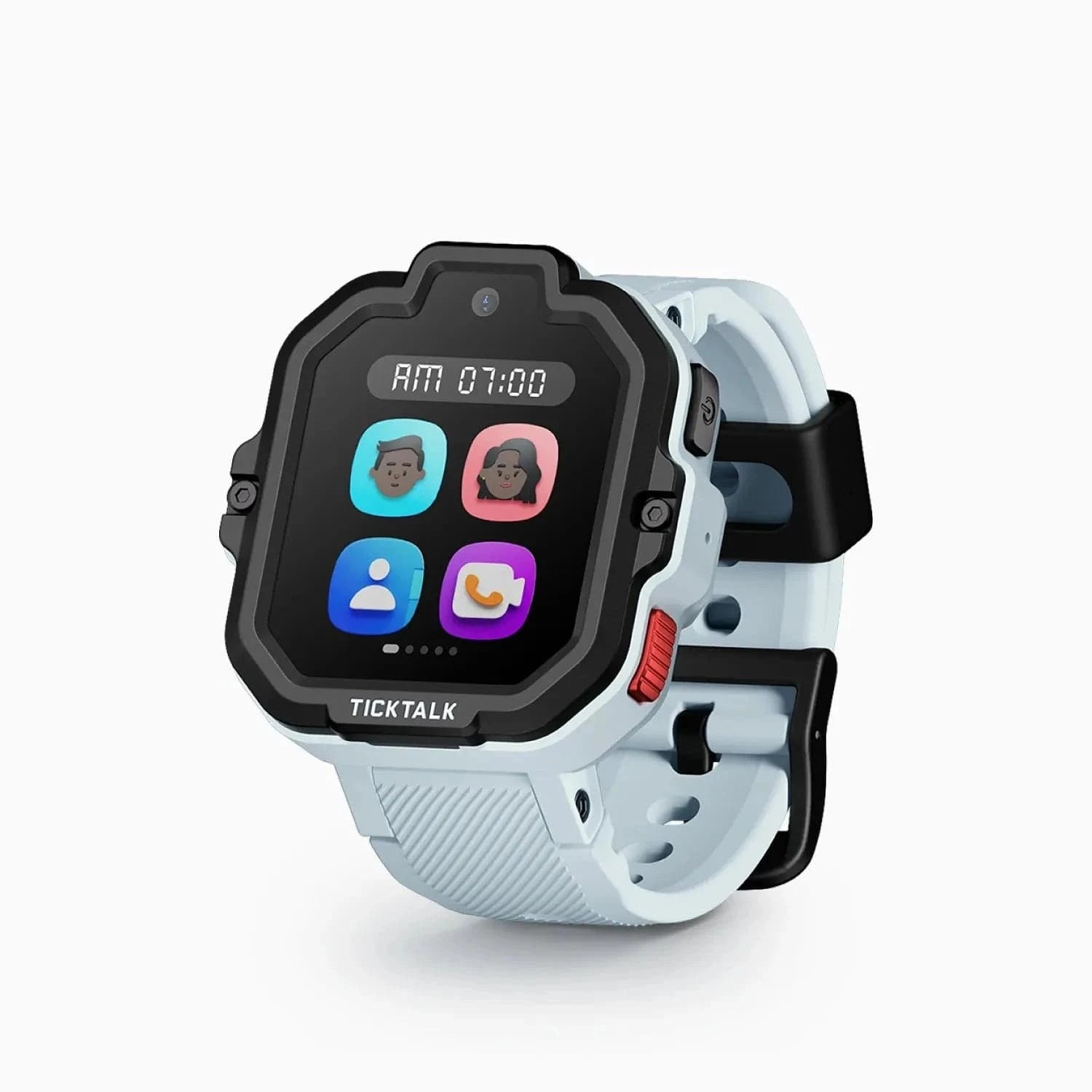
| TickTalk 5 | $159.99 | ★★★★☆ 4.3 | 3-12 | Real-time GPS tracking with AI SmartPin accuracy | |
| Garmin Bounce 2 | $299.99 | ★★★★☆ 4.3 | 6-12 | Multi-GNSS GPS is the most accurate kids tracking available | |
| Apple AirTag | $29 | ★★★☆☆ 3 | Any | Cheapest tracking option at $29 with no monthly fee |
Prices may vary. As an Amazon Associate we earn from qualifying purchases.
Affiliate Disclosure: This article contains affiliate links. If you purchase through our links, we may earn a small commission at no extra cost to you. This helps support our testing and keeps the site running for families like yours. All opinions are 100% our own -- we have no sponsorship relationship with Apple, TickTalk, Garmin, or any other brand mentioned in this article.
This is a question I hear constantly from parents: "Can I just put an AirTag in my kid's backpack instead of buying a smartwatch? It is so much cheaper."
I understand the appeal. An Apple AirTag costs $29. No monthly fee. The battery lasts over a year. You clip it to a backpack or slip it in a pocket and you can see your child's location on your iPhone. Compared to a $150 to $300 smartwatch with a $10 per month cellular plan, the math seems obvious.
But the math is misleading, because an AirTag and a kids GPS smartwatch are fundamentally different products solving fundamentally different problems. An AirTag tells you roughly where something is. A GPS smartwatch tells you exactly where your child is, lets you communicate with them, and gives them a way to call for help in an emergency. Those are not the same thing.
I have tested both approaches extensively. I have put AirTags in backpacks, jacket pockets, and lunchboxes. I have tested every major GPS kids smartwatch on the market. And I am going to lay out exactly when each option makes sense -- and when it does not -- so you can make the right choice for your family.
Before we get into the detailed comparison, I need to explain something that Apple's marketing does not make obvious: an AirTag does not have GPS.
That surprises most parents. The AirTag has become so associated with "tracking" that people assume it has a GPS chip inside. It does not. Here is how an AirTag actually works:
This means an AirTag's location accuracy and update frequency depend entirely on how many Apple devices happen to pass near it. In a busy urban area -- a city sidewalk, a shopping mall, a school in a neighborhood full of iPhone users -- the AirTag updates frequently and fairly accurately because there are Apple devices everywhere. In a rural area, a quiet park, or anywhere with fewer Apple devices nearby, the AirTag may not update for minutes or even hours.
A GPS smartwatch, by contrast, uses actual GPS satellites (and often additional satellite systems like GLONASS and Galileo) plus a cellular data connection to transmit your child's exact location in real time. It does not depend on other people's phones being nearby. If there is cell coverage, the watch knows where your child is and tells you immediately.
This is not a technical nuance. It is the fundamental difference that should drive your decision.
| Feature | Kids GPS Smartwatch | Apple AirTag |
|---|---|---|
| Tracking Technology | Real-time GPS + cellular | Bluetooth crowd-sourced (Find My network) |
| Location Accuracy | 5-30 feet (depends on watch) | Varies widely -- feet to hundreds of feet |
| Update Frequency | Every 1-5 minutes (real-time) | Depends on nearby Apple devices |
| Voice Calling | Yes | No |
| Video Calling | Some models (TickTalk 5, etc.) | No |
| Text Messaging | Yes | No |
| SOS / Emergency Button | Yes (some call 911) | No |
| Geofencing | Yes (alerts when child leaves area) | Limited (Notify When Left Behind) |
| Worn on the Child | Yes (wrist) | No (backpack, pocket, jacket) |
| Can Be Separated from Child | Unlikely (on their wrist) | Easily (backpack removed, jacket left behind) |
| Battery Life | 1-2 days (cellular watches) | 1+ year |
| Monthly Cost | $9.99-$17.99/mo | $0 |
| Upfront Cost | $109-$300 | $29 |
| Two-Year Total Cost | $350-$660+ | $29 |
| Requires iPhone | No (most watches work with Android too) | Yes |
| Water Resistance | Varies (IP67 to 5ATM) | IP67 |
| Works Without Cell Coverage | Limited (needs cellular) | Limited (needs nearby Apple devices) |
The table makes the trade-offs clear. The AirTag wins on cost, battery life, and simplicity. The GPS smartwatch wins on accuracy, communication, safety features, and reliability.
I am not here to tell you that AirTags are useless for families. There are genuine scenarios where an AirTag is the right tool:
If your child is 3 or 4 years old, attending daycare or preschool, and not yet at the age where they need to communicate independently, an AirTag clipped inside their backpack provides a basic layer of location awareness. At this age, your child is always with a caregiver -- you are not expecting them to call you or press an SOS button. You just want confirmation that the backpack (and presumably the child with it) arrived at daycare. For this specific use case, an AirTag at $29 is a reasonable, low-cost option.
Some parents in my testing network use both: a GPS smartwatch on the child's wrist and an AirTag in their backpack. The smartwatch handles communication and real-time tracking. The AirTag provides a backup in case the watch dies (battery life is always a concern) or gets left somewhere. This belt-and-suspenders approach costs an extra $29 and provides genuine peace of mind.
If you simply cannot afford a GPS smartwatch and the monthly plan right now -- and I understand that not every family can -- an AirTag is better than nothing. It is $29, it lasts a year without charging, and in areas with dense Apple device coverage, it will give you a general idea of where your child's belongings are. It is not a replacement for a GPS watch, but it is vastly better than having no tracking at all.
AirTags are excellent for tracking things: backpacks, lunchboxes, jackets, bikes, and instruments. If your child has a habit of leaving their jacket at school or their lunchbox on the bus, an AirTag solves that specific problem elegantly and cheaply. This is what AirTags were designed for, and they do it well.
For most families with school-age children (ages 5-12), a GPS smartwatch is the significantly better option. Here is why.
An AirTag cannot make a phone call. It cannot send a text message. It cannot let your child press an SOS button when they feel scared or unsafe. A GPS smartwatch does all of these things.
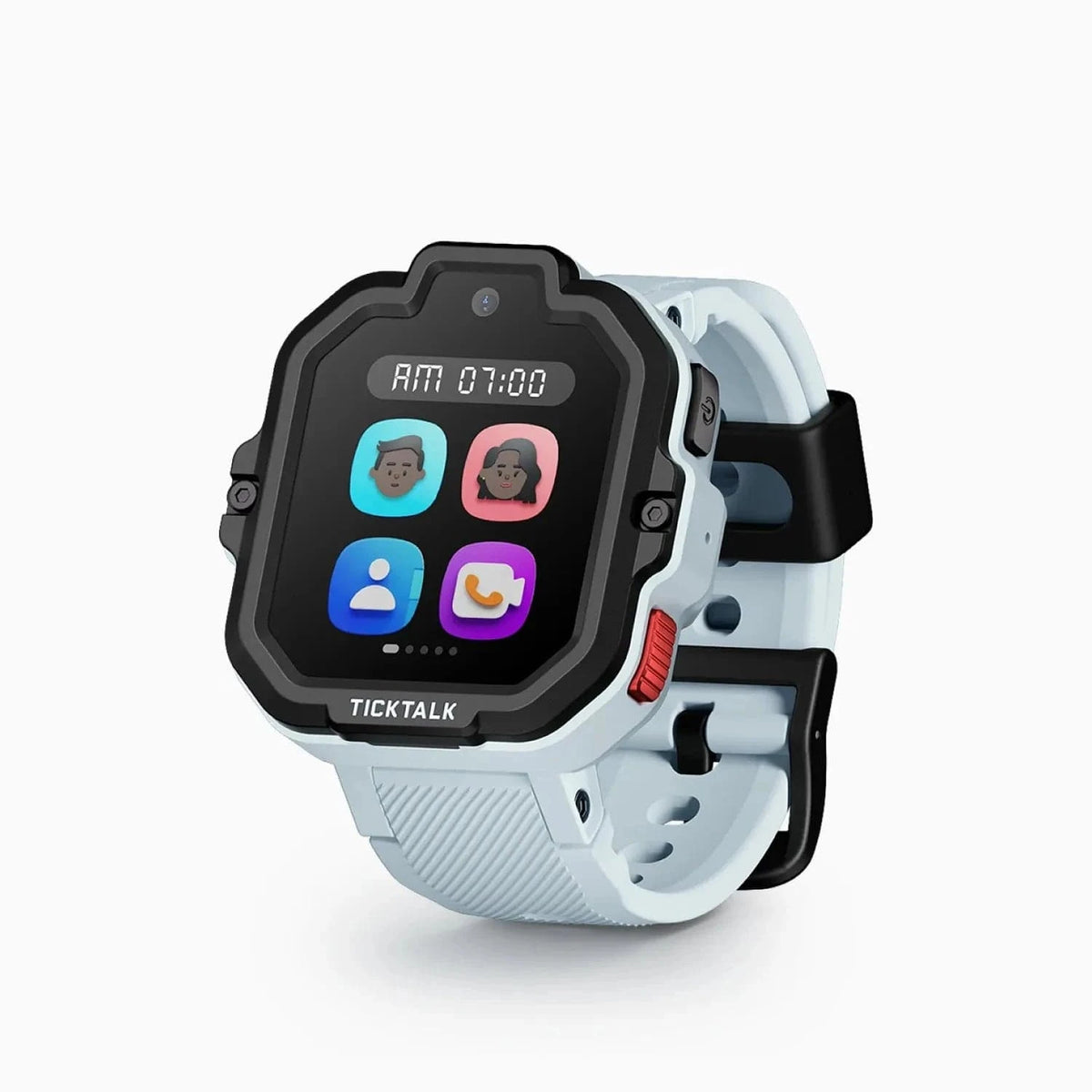
The TickTalk 5 offers voice calling, video calling through a 5MP camera, group messaging, and an SOS button that calls 911 and emergency contacts. The Garmin Bounce 2 provides voice calling, text messaging with voice transcription, and an assistance alert feature. These are not luxury features -- they are safety fundamentals for a child who walks to school, goes to a friend's house, or participates in after-school activities.
The communication gap between an AirTag and a smartwatch is absolute. An AirTag gives you zero ability to reach your child and gives them zero ability to reach you.
An AirTag's location updates are inconsistent. In my testing, I placed an AirTag in a backpack and tracked it throughout a school day. In the morning, the AirTag showed the backpack arriving at school within about 5 minutes of actual arrival -- acceptable. During the school day, location updates were sporadic, coming every 10 to 30 minutes depending on how many iPhones passed near the backpack. After school, there was one 45-minute gap with no update at all when the backpack was at an after-school activity in a building with low foot traffic.
During the same test period, a GPS smartwatch on the child's wrist provided location updates every 2 to 3 minutes consistently. When I opened the app, I saw where my tester was right now, not where they were 20 minutes ago.
For a parent who needs to know where their child is at pickup time, at the end of soccer practice, or during the walk home from school, real-time GPS tracking is not optional. It is the entire point.
The moment your child starts moving through the world without you -- walking to school, biking to a friend's house, taking the bus to practice -- the communication and SOS features of a GPS smartwatch become essential. An AirTag cannot tell you if your child fell off their bike. It cannot let your child call you when they get to their friend's house. It cannot alert you if your child presses a panic button because a stranger approached them.
If your child has any degree of independent mobility, a GPS smartwatch with calling and SOS is the appropriate safety tool. An AirTag is not.
This is the limitation most parents do not think about until it matters. An AirTag goes in a backpack, a jacket pocket, or a lunchbox. It does not go on your child. When your child takes off their jacket at recess and leaves it on a bench, the AirTag stays with the jacket. When your child's backpack is hung on a hook in the classroom, the AirTag tells you where the hook is, not where your child is during PE outside.
A smartwatch stays on your child's wrist. Wherever your child goes, the watch goes. The tracking is attached to the person, not to a piece of clothing or equipment. For child safety purposes, this distinction is critical.
If you have decided that a GPS smartwatch is the right choice -- and for most families with kids ages 5 to 12, it is -- here are my specific recommendations based on your priorities.
Update (October 2026): back in stock on Amazon. TickTalk has replaced the TickTalk 5 with the TickTalk 6 and its own store is sold out, but Amazon has the TickTalk 5 in stock again at $159.99, sold by TickTalk's Amazon storefront. It is no longer our top pick: stock is finite and its successor is on pre-order. The write-up below still stands.
The TickTalk 5 at $159.99 plus $9.99 per month was the best all-around kids smartwatch for most families until TickTalk replaced it. AI SmartPin GPS, video calling, 48-hour battery life, and over 40 parental controls. Read our full TickTalk 5 review for the deep dive.
The Garmin Bounce 2 at $299.99 has multi-GNSS tracking that is the most consistent GPS tracking in the kids watch market. If your primary motivation for tracking is knowing exactly where your child is -- and the reason you were considering an AirTag was location awareness specifically -- the Garmin Bounce 2 delivers the most dependable location tracking available. It is also swim-proof at 5 ATM. See our Garmin Bounce 2 review.
The Xplora X6Play at $169.99 runs on AT&T or T-Mobile (its Xplora Connect SIM comes pre-installed, and it will also take your own GSM SIM on those networks, though Xplora doesn't support third-party SIMs), which lets you shop for the cheapest prepaid plan. If cost is the reason you were considering an AirTag, the X6Play is an affordable way to get real GPS tracking, calling, and a camera on your child's wrist. Read our Xplora X6Play review.
The Gabb Watch 3e at $229.99 provides GPS, calling, messaging, and absolutely nothing else. No internet, no camera, no games. If you like the simplicity of an AirTag but need real safety features, the Gabb Watch 3e is the closest thing to an AirTag's simplicity in smartwatch form. See our Gabb Watch 3e review.
If monthly fees are the dealbreaker and you do not need calling or GPS, the Garmin Vivofit Jr. 3 at $89.99 (list; about $90 on Amazon from third-party sellers) is an activity tracker with a year-long battery and no subscription. It does not track location, but it does put a durable device on your child's wrist with chore management and fitness features. For more subscription-free options, see our best kids smartwatches with no monthly fee guide.
For the complete ranking of every option, our 10 best kids smartwatches in 2026 roundup covers all the top picks.
Apple's AirTag is not the only Bluetooth tracker on the market. Tile trackers work similarly, using a crowd-sourced Bluetooth network to report location. The same fundamental limitations apply: Tile trackers are not GPS devices, they depend on other Tile app users being nearby, and the Tile network is significantly smaller than Apple's Find My network, which means less frequent and less accurate updates.
Samsung Galaxy SmartTags work through Samsung's SmartThings Find network, which is also smaller than Apple's. If you have a Samsung phone, they function similarly to AirTags within their ecosystem.
The bottom line is the same regardless of brand: Bluetooth trackers are designed to find lost items. They are not designed to track children in real time. They do not provide communication or emergency features. For child safety, a GPS smartwatch is the appropriate category of product.
Parents fixate on the upfront cost difference -- $29 for an AirTag versus $150+ for a smartwatch. That comparison is real, but it is incomplete. Here is the full picture.
| Cost | Apple AirTag | TickTalk 5 | Garmin Bounce 2 |
|---|---|---|---|
| Device Cost | $29 | $159.99 | $299.99 |
| Monthly Plan | $0 | $9.99/mo | $9.99/mo |
| Year 1 Total | $29 | $279.87 | $419.87 |
| Year 2 Total | $29 | $399.75 | $539.75 |
| What You Get | Delayed location of an item | Real-time GPS + calling + video chat + SOS + camera + music | Real-time GPS + calling + texting + fitness + swim-proof |
Yes, a GPS smartwatch costs more. Significantly more. But the question is not "which is cheaper." The question is "what does my family need?" If your child needs to call you from school, press an SOS button in an emergency, or be located in real time during their walk home, an AirTag does not do those things at any price.
If you genuinely only need to confirm that a backpack arrived at school and cost is the primary factor, an AirTag at $29 is a legitimate tool for that specific job. But it is a fundamentally different job than what a GPS smartwatch does.
Yes, and some families do. The approach I have seen work well:
The AirTag costs $29 and lasts over a year on a single battery. As an insurance policy against a dead smartwatch battery, it is a cheap and effective supplement. Several parents in my testing network use this dual approach and appreciate having the redundancy.
The one thing I would not recommend is using an AirTag as a replacement for a GPS smartwatch. They serve different purposes. Use both if budget allows, but do not substitute a $29 item tracker for a proper child safety device.
No -- an AirTag does not provide real-time tracking. It reports its last known location whenever a nearby Apple device detects its Bluetooth signal and relays that information to the Find My network. In busy areas with many iPhones, updates may come every few minutes. In quieter areas, updates can be delayed by 15 minutes, 30 minutes, or longer. For real-time child tracking, you need a GPS smartwatch with a cellular connection. Our best GPS smartwatches for kids guide covers the most accurate options.
An AirTag is safe for school-age children when clipped inside a backpack, but for kids under 5 you must secure the battery compartment because the coin-cell battery is a choking hazard. Apple cautions that AirTags contain a replaceable coin-cell battery (CR2032) that can be a choking hazard for very young children. For children under 5, you should secure the AirTag inside a holder or case that prevents access to the battery compartment. For school-age children, the risk is minimal as long as the AirTag is clipped inside a backpack or placed in a secure pocket rather than given to the child as a loose item. An AirTag is not designed to be worn -- there is no wrist strap or clip for direct body attachment.
The AirTag is far cheaper -- $29 over two years versus roughly $400 for a smartwatch like the TickTalk 5. An AirTag costs $29 with no monthly fees, so over two years the total cost is $29 (plus a replacement battery at about $3). A GPS smartwatch like the TickTalk 5 costs $159.99 plus $9.99 per month, totaling roughly $400 over two years. The AirTag is dramatically cheaper. But the two products are not equivalent -- the smartwatch provides real-time GPS, calling, video chat, SOS, and messaging that the AirTag does not offer. The cost comparison only matters if both products meet your needs, and for most families with school-age children, they do not. See our kids smartwatch monthly plans compared guide for a full breakdown of ongoing costs.
No -- an AirTag requires an iPhone with iOS 14.5 or later and the Find My app to set up and track. There is no Android app for AirTag tracking. If your household does not have an iPhone, an AirTag is not an option. Most GPS smartwatches, by contrast, work with both iPhone and Android -- the TickTalk 5, Garmin Bounce 2, Gabb Watch 3e, and Xplora X6Play all have parent apps for both platforms. The notable exception is the Fitbit Ace LTE, which requires an Android phone for setup.
It depends on your child's independence level. If your 5-year-old is always with a caregiver -- at home, at daycare, at preschool -- and never moves independently, an AirTag in their backpack provides basic location confirmation at minimal cost. But if your 5-year-old is starting kindergarten, attending activities, or beginning to have even small moments of independence, a GPS smartwatch with calling and SOS is the safer choice. The TickTalk 5 works well for kids as young as 5, and the Gabb Watch 3e has a simple enough interface for very young users. For more age-specific guidance, see our best smartwatches for 5-year-olds guide.
An Apple AirTag is a good product. It does what it was designed to do -- track items -- reliably and cheaply. But it was not designed to track children, and it does not provide the communication, emergency, or real-time GPS features that a child safety device requires.
A GPS smartwatch like the TickTalk 5 or the Garmin Bounce 2 costs more. It requires a monthly plan. It needs charging. But it gives your child the ability to call you, the ability to press an SOS button in an emergency, and it gives you real-time GPS tracking that does not depend on strangers' iPhones walking past your child's backpack.
For most families with school-age children, a GPS smartwatch is the right investment. Use an AirTag as a supplemental backup if you want, but do not use it as a substitute for the real thing.
Your child's safety is not the place to optimize for the cheapest option.
Before you buy, check our deals page for the latest pricing on every smartwatch mentioned above.
Ready to choose a smartwatch? Start with our 10 best kids smartwatches in 2026 for the complete ranking, or read our kids smartwatch buying guide for a detailed walkthrough of what features matter most. If GPS accuracy is your top priority, our best GPS smartwatches for kids guide covers every option. And for a deeper look at what safety features to prioritize, see our kids smartwatch safety features explained article.
Bark Watch vs TickTalk 5: AI text monitoring for older kids versus HD video calling and value for younger ones. We break down GPS, camera, battery, and cost to name your winner.
Gizmo Watch 3 vs TickTalk 5: we compare GPS accuracy, video calling, battery, water resistance, and carrier lock-in to help you pick the right kids watch.
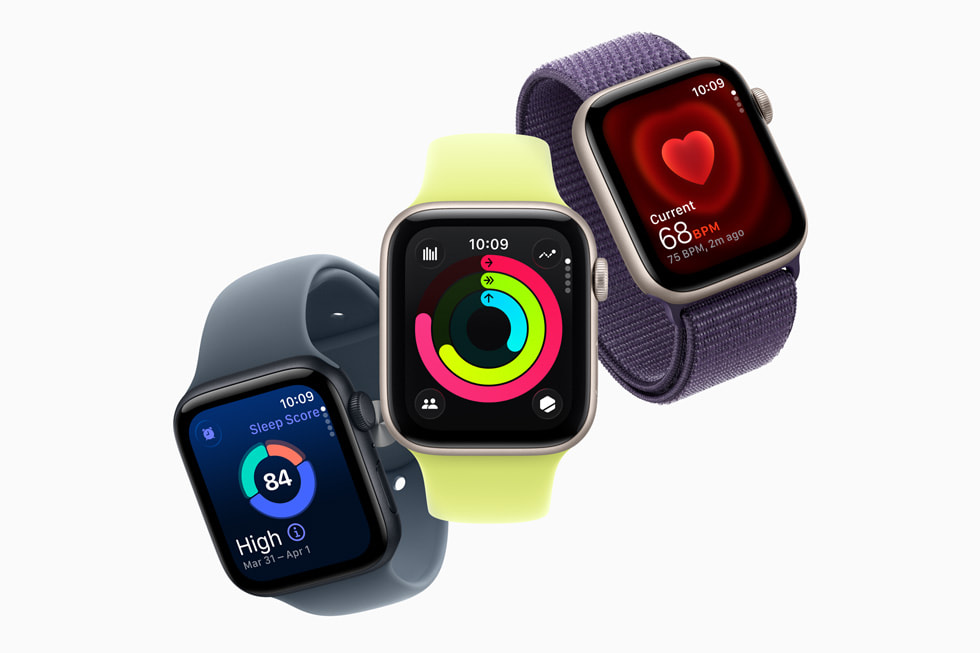
Pinwheel Watch vs Apple Watch SE: one has parent-monitored AI chat, the other is a premium Apple watch via Family Setup. We break down which is right for your kid.
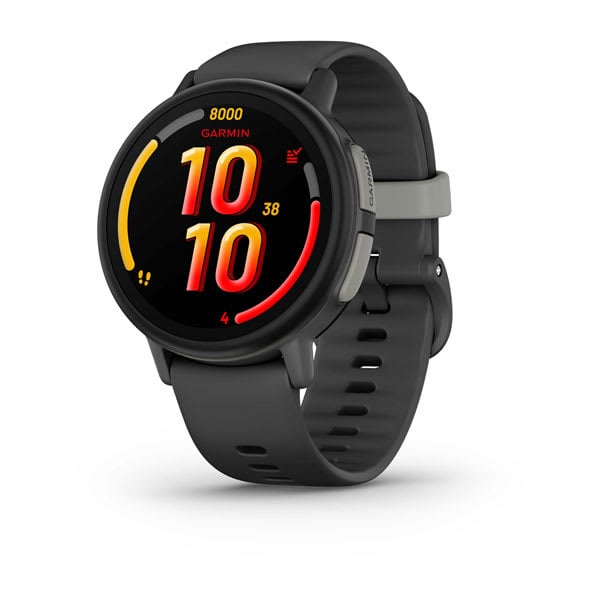
Garmin Bounce 2 vs Bark Watch head-to-head comparison. We break down GPS accuracy, monthly costs, fitness tracking, parental controls, and which watch delivers the best value for your family.
TickTalk 5 vs COSMO JrTrack 5 head-to-head comparison. We break down GPS accuracy, video calling, cameras, music streaming, monthly costs, and which watch is the better buy for your family.
New review alerts, deal drops, and seasonal buying guides — delivered weekly. No spam, unsubscribe anytime.
No spam. Unsubscribe anytime.