Comparisons|
Apple Watch SE vs Garmin Bounce 2 for Kids (2026): Which Wins?
Apple Watch SE 3 vs Garmin Bounce 2 as a kids watch: we compare phone requirements, GPS, geofencing, battery, safety features, and price to help you choose.
Fitbit Ace LTE vs Garmin Bounce 2: we compare price, phone compatibility, GPS, battery, voice calling, and fitness features to help you pick the right kids watch.
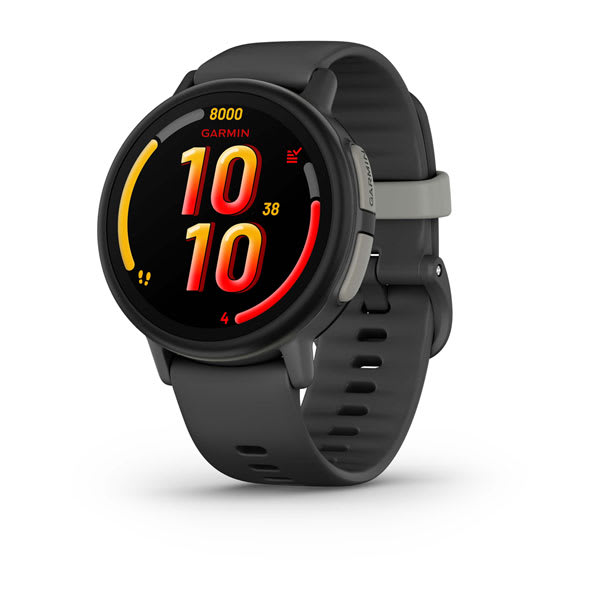
Garmin Bounce 2
$299.99· 4.3/5 rating
Affiliate Disclosure: This article contains affiliate links. If you purchase through our Amazon links, we may earn a small commission at no extra cost to you. We only recommend products we have personally tested and believe in. Our opinions are our own and are not influenced by any affiliate partnerships.
The Fitbit Ace LTE and the Garmin Bounce 2 are the two most fitness-focused kids smartwatches you can buy -- both come from serious fitness brands, both gamify movement to get kids active, and both are swim-proof enough for the pool. But they are aimed at different families, and the price gap between them is enormous: the Garmin Bounce 2 costs $299.99, nearly double the Fitbit Ace LTE's $159.99.
Here is the bottom line up front. The Garmin Bounce 2 is the better all-around watch and the one most families should buy: it works on any phone (iPhone or Android), has far better GPS and battery life, and adds richer communication. The Fitbit Ace LTE is the value pick at half the price -- a genuinely great fitness-first watch for a budget-conscious Android household whose kid needs motivation to move more than they need top-tier tracking. One hard limit decides it for a lot of people: the Fitbit is Android-only, so if you own an iPhone, the Ace LTE is off the table entirely.
Let's break down every meaningful difference.
| Spec | Garmin Bounce 2 | Fitbit Ace LTE |
|---|---|---|
| Price | $299.99 | $159.99 |
| Parent Phone | iOS or Android (Garmin Jr. app) | Android only (no iOS app) |
| Ages | 6-12 | 7-12 |
| Display | 1.2" round AMOLED (390x390) | OLED, Gorilla Glass 3 |
| GPS | Elite multi-GNSS (GPS + GLONASS + Galileo) | Google-powered GPS/GNSS |
| Voice Calls | Yes (LTE) | Yes (LTE) |
| Messaging | Full keyboard + presets + voice messages | Preset replies + emoji only |
| Camera / Video | No | No |
| Battery | ~2 days | ~16 hours |
| Water Resistance | 5 ATM (swim-proof) | 5 ATM (swim-proof) |
| Fitness | Garmin Jr. gems, adventure trails, Toe-to-Toe | Fitbit Arcade + continuous heart rate |
| SIM | None (Garmin-managed LTE) | None (Google-managed LTE) |
| Monthly Plan | $9.99/mo or $99.99/yr | $9.99/mo or $119.99/yr |
| Best For | Most families wanting a do-it-all watch on any phone | Budget Android families focused on fitness motivation |
Let's address the elephant in the room first, because for many families it decides everything.
The Fitbit Ace LTE is $159.99. The Garmin Bounce 2 is $299.99 -- nearly double. That is a $140 difference at the register before you factor in the monthly plan. For a device your kid might lose, break, or outgrow in a couple of years, that gap is significant. The Fitbit delivers real GPS tracking, voice calling, swim-proofing, and best-in-class gamified fitness for half the price of the Garmin.
The ongoing costs are closer but still favor Garmin slightly. Both charge $9.99/month, but Garmin's annual plan is $99.99 versus Fitbit's $119.99 -- and the Fitbit's annual option barely discounts the monthly rate, so you keep paying near-full price to keep the watch's core features working.
Winner: Fitbit Ace LTE. Half the upfront price for a capable, fun watch. If budget is your top constraint, this is a real advantage.
Before you fall in love with the Fitbit's price, check this: the Fitbit Ace LTE requires an Android phone. The Fitbit Ace app is Android-only -- there is no iOS version -- so if you are an iPhone-only household, you cannot set up or manage the Ace LTE at all. You would need access to an Android device just to use it.
The Garmin Bounce 2 works on both iOS and Android through the Garmin Jr. app. iPhone families, Android families, mixed households -- all supported. This universal compatibility is a big part of why it is the safer recommendation for most people.
Winner: Garmin Bounce 2. It works for everyone. The Fitbit locks out every iPhone-only household in America -- a huge share of families -- before the comparison even starts.
You are buying a GPS watch to know where your kid is, so accuracy matters most. Both are good here; one is elite.
The Garmin Bounce 2 has the gold-standard GPS in the kids category: multi-GNSS positioning (GPS + GLONASS + Galileo) that landed within 3 to 8 meters outdoors in our testing, with geofence alerts arriving in 30 to 60 seconds. It also supports temporary geofences you can drop on the fly -- perfect for a birthday party at an unfamiliar address.
The Fitbit Ace LTE uses Google-powered location services and performs well -- typically 5 to 12 meters outdoors, with reliable geofencing that alerted within 1 to 2 minutes. Google's vast Wi-Fi and cell-tower data helps it maintain a lock on tree-lined streets and in vehicles. It is genuinely good; it just is not quite Garmin-level.
Winner: Garmin Bounce 2. Both are dependable, but Garmin's multi-GNSS accuracy and faster geofence alerts make it the more precise safety tool.
This is one of the most practical categories, and it is not close.
The Garmin Bounce 2 delivers about 2 days of real-world use even with its bright AMOLED display -- charge every other night and battery becomes a non-issue, with a real safety margin for sleepovers or camping trips.
The Fitbit Ace LTE is rated for about 16 hours, the weakest in its class. On a busy day of school plus afterschool activities, it can run low before bedtime, which means nightly charging is mandatory. For a safety device, a watch that might die at 4 p.m. is a real concern.
Winner: Garmin Bounce 2, decisively. Roughly three times the battery life.
Good news: unlike some fitness watches, both of these support two-way voice calling over LTE to parent-approved contacts, with clear audio. Where they differ is messaging.
The Garmin Bounce 2 offers a full on-screen keyboard for free-form text, preset replies, and voice messages with transcription. Your kid can actually type a reply, not just tap a canned one.
The Fitbit Ace LTE is more limited: preset text replies and emoji only, with no free-form text input. That is a reasonable choice for the target age, but older kids will feel the ceiling.
Neither watch has a camera, so neither does video calling or photos -- if that is a must-have for your family, both are out, and you should look at a TickTalk 5 or Xplora X6Play instead.
Winner: Garmin Bounce 2. Both call well, but Garmin's full-keyboard messaging and voice-message transcription give kids more ways to communicate.
This is the category both watches were built for, and it is the Fitbit's best chance to shine -- fitness is its entire identity.
The Fitbit Ace LTE is built around Fitbit Arcade, a genuinely clever system that turns movement into a video game: kids unlock games and rewards by hitting activity goals, and a continuous heart rate sensor lets them watch their heart rate spike during sprints. In our testing it truly motivated an 8-year-old to move more -- the gamification works.
The Garmin Bounce 2 counters with Garmin Jr.'s mature gamification -- kids earn gems, progress along virtual adventure trails, and compete in Toe-to-Toe step challenges with friends. Our tester averaged over 75 active minutes a day, well above the CDC's recommended 60. It tracks a broader set of activities (walk, run, bike, pickleball, jump rope, team sports).
Winner: Tie. These are the two best fitness ecosystems in the kids category. The Fitbit leans arcade-style fun plus a heart rate sensor; the Garmin offers broader activity tracking and a proven motivational loop. Pick based on which style fits your kid.
Both watches punch above the category on screen quality. The Garmin Bounce 2 has a stunning 1.2-inch round AMOLED (390x390) -- the best display on any kids smartwatch. The Fitbit Ace LTE has a gorgeous OLED protected by Gorilla Glass 3. Both look premium, not toy-like.
On water resistance, it is a true tie: both are rated 5 ATM (swim-proof to 50 meters), so both handle pools, showers, and rain without worry -- a category where these two beat most purpose-built kids watches.
Winner: Slight edge Garmin on display; tie on water resistance. Both are excellent here.
The Garmin Bounce 2 is the right pick if:
The tradeoff is price: at $299.99 it is the most expensive kids watch on the market. Read our full Garmin Bounce 2 review for the complete six-week testing breakdown.
The Fitbit Ace LTE is the right pick if:
Just go in knowing the two real limitations: Android-only, and a 16-hour battery that needs nightly charging. Read our full Fitbit Ace LTE review for the complete ten-week testing notes.
These are the two best fitness-focused kids watches on the market, both swim-proof, both with voice calling, both with genuinely motivating activity systems. But they are built for different families -- and separated by nearly $140.
For most families, the Garmin Bounce 2 is the better buy: it works on any phone, tracks more accurately, lasts three times as long between charges, and communicates better. It is the more complete safety device, and the universal iOS/Android support means no family is locked out.
The Fitbit Ace LTE is the smart value choice for a specific family: budget-conscious, on Android, with a kid who needs motivation to move more than they need elite GPS or all-day battery. At half the price, it is a lot of watch -- as long as you are not an iPhone household and can live with nightly charging.
Our recommendation: view the Garmin Bounce 2 on Amazon if you want the best all-around watch on any phone, or check the Fitbit Ace LTE on Amazon if you are on Android and want to save $140 on a fitness-first pick.
No -- the Fitbit Ace LTE requires an Android phone. The Fitbit Ace app is Android-only, with no iOS version. If you are an iPhone-only household, you cannot set up or manage the Ace LTE without access to an Android device. The Garmin Bounce 2, by contrast, works on both iOS and Android through the Garmin Jr. app.
Yes -- both the Garmin Bounce 2 and the Fitbit Ace LTE support two-way voice calling over LTE to parent-approved contacts. The Garmin adds richer messaging (a full on-screen keyboard plus voice messages with transcription), while the Fitbit is limited to preset replies and emoji. Neither watch has a camera, so neither offers video calling.
The Garmin Bounce 2 has the better GPS. Its multi-GNSS system (GPS + GLONASS + Galileo) was accurate to within 3 to 8 meters outdoors with geofence alerts in 30 to 60 seconds. The Fitbit Ace LTE's Google-powered GPS is good too -- typically 5 to 12 meters -- but not quite as precise, and its geofence alerts took 1 to 2 minutes.
The Garmin Bounce 2 has better battery life, by a wide margin. It lasts about 2 days per charge, while the Fitbit Ace LTE lasts roughly 16 hours -- the weakest in its class. The Fitbit needs nightly charging, whereas the Garmin can go every other night.
It depends on your situation. The Garmin Bounce 2 ($299.99) justifies its premium with universal phone compatibility, elite GPS, two-day battery, and richer communication. But if you are on Android, on a budget, and mainly want to motivate your kid to be active, the Fitbit Ace LTE ($159.99) delivers a great fitness-first experience for half the price.
Yes -- both the Garmin Bounce 2 and the Fitbit Ace LTE carry a 5 ATM rating, meaning they are swim-proof to 50 meters and handle pools, showers, and rain without issue. This is one area where both fitness watches beat most purpose-built kids smartwatches, which are often only splash-resistant.
Both are excellent, and this is the Fitbit Ace LTE's strongest category. Fitbit Arcade turns movement into unlockable games, and the heart rate sensor lets kids see their effort in real time. The Garmin Bounce 2 counters with gems, adventure trails, and Toe-to-Toe step challenges. If fitness motivation is your single top priority and you are on Android, the cheaper Fitbit is a fantastic fit; if you want that motivation plus the best GPS and battery, the Garmin is worth the premium.
Check the latest prices on both watches at our deals page.
Still deciding? Read our full individual reviews of the Garmin Bounce 2 and the Fitbit Ace LTE, or see how they compare to every top option in our best GPS smartwatches for kids roundup.
Apple Watch SE 3 vs Garmin Bounce 2 as a kids watch: we compare phone requirements, GPS, geofencing, battery, safety features, and price to help you choose.
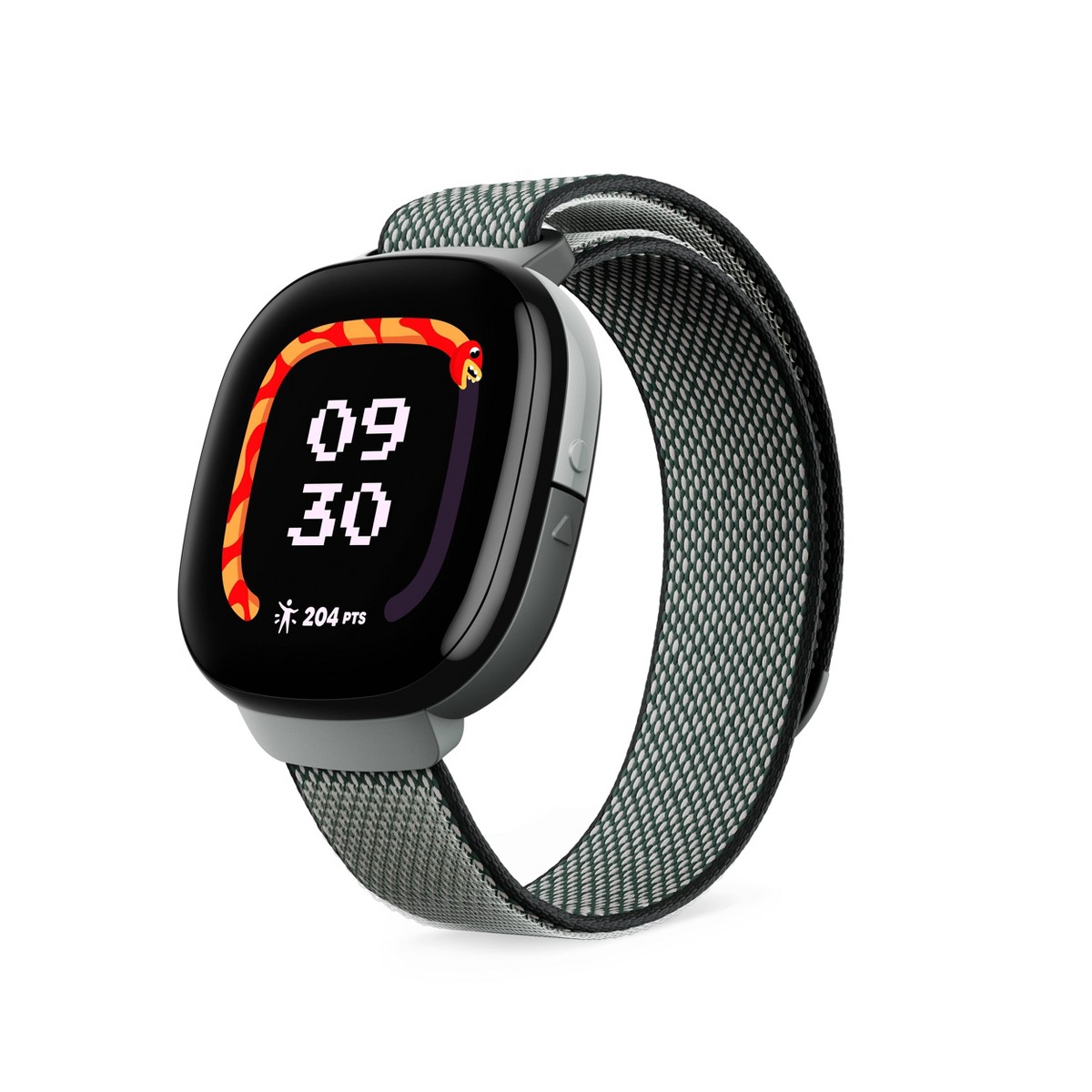
Fitbit Ace LTE vs Gabb Watch 3e: fitness motivation vs distraction-free simplicity. We compare phone compatibility, GPS, battery, and price to help you choose.
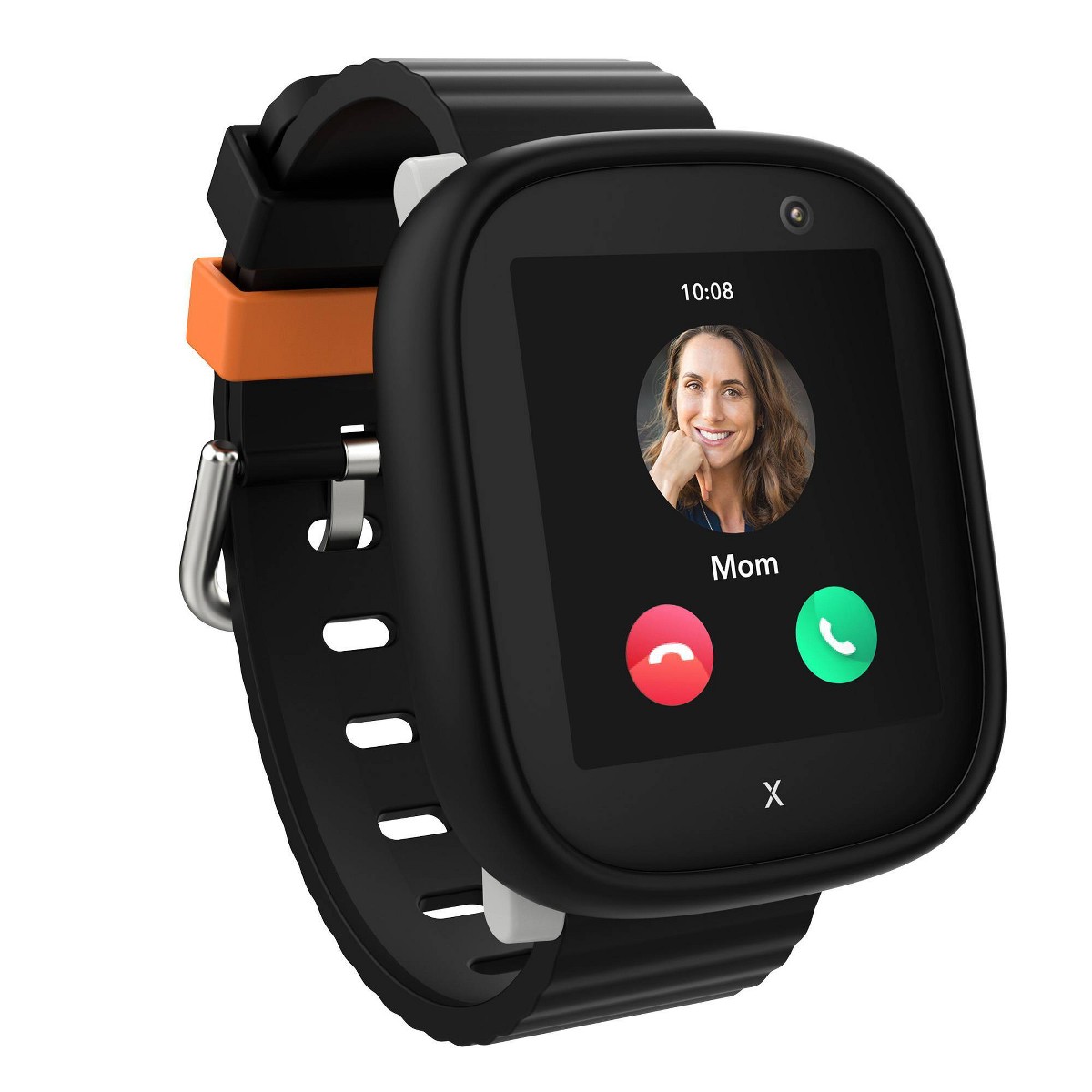
Fitbit Ace LTE vs Xplora X6Play: we compare phone compatibility, video calling, fitness features, camera, battery, and swim-proofing to help you pick the right kids watch.
Garmin Bounce 2 vs COSMO JrTrack 5: premium do-everything vs precision GPS value. We compare GPS, battery, durability, and cost to help you choose.
Samsung Galaxy Watch 7 vs Garmin Bounce 2 as a kids watch: we compare GPS, geofencing, battery, phone requirements, and price to help you pick the right one.
New review alerts, deal drops, and seasonal buying guides — delivered weekly. No spam, unsubscribe anytime.
No spam. Unsubscribe anytime.