Buying Guides|
Are Kids Smartwatches Worth It? An Honest Parent's Take (2026)
Are kids smartwatches worth it? After years of testing, here's the honest answer — when they're absolutely worth the money, when they're not, and the real costs.
Planning spring break with kids? We tested the best GPS smartwatches for travel — waterproof picks with long battery, geofencing, and calling features.
| Watch | Price | Rating | Ages | Best For | |
|---|---|---|---|---|---|
| TickTalk 5 | $159.99 | ★★★★☆ 4.3 | 3-12 | AI SmartPin GPS is remarkably accurate | |
| Garmin Bounce 2 | $299.99 | ★★★★☆ 4.3 | 6-12 | True swim-proof 5ATM rating | |
| Apple Watch SE 3 | $249.00 | ★★★★☆ 4.2 | 10+ | International cellular coverage | |
| Fitbit Ace LTE | $179.95 | ★★★½☆ 3.8 | 7-13 | 5 ATM swim-proof for pool, ocean, and water slides |
Prices may vary. As an Amazon Associate we earn from qualifying purchases.
Affiliate Disclosure: This article contains Amazon affiliate links. If you purchase through these links, we may earn a small commission at no extra cost to you. This helps us keep testing watches and publishing honest reviews. All opinions are our own -- we buy these watches with our own money and test them with real kids.
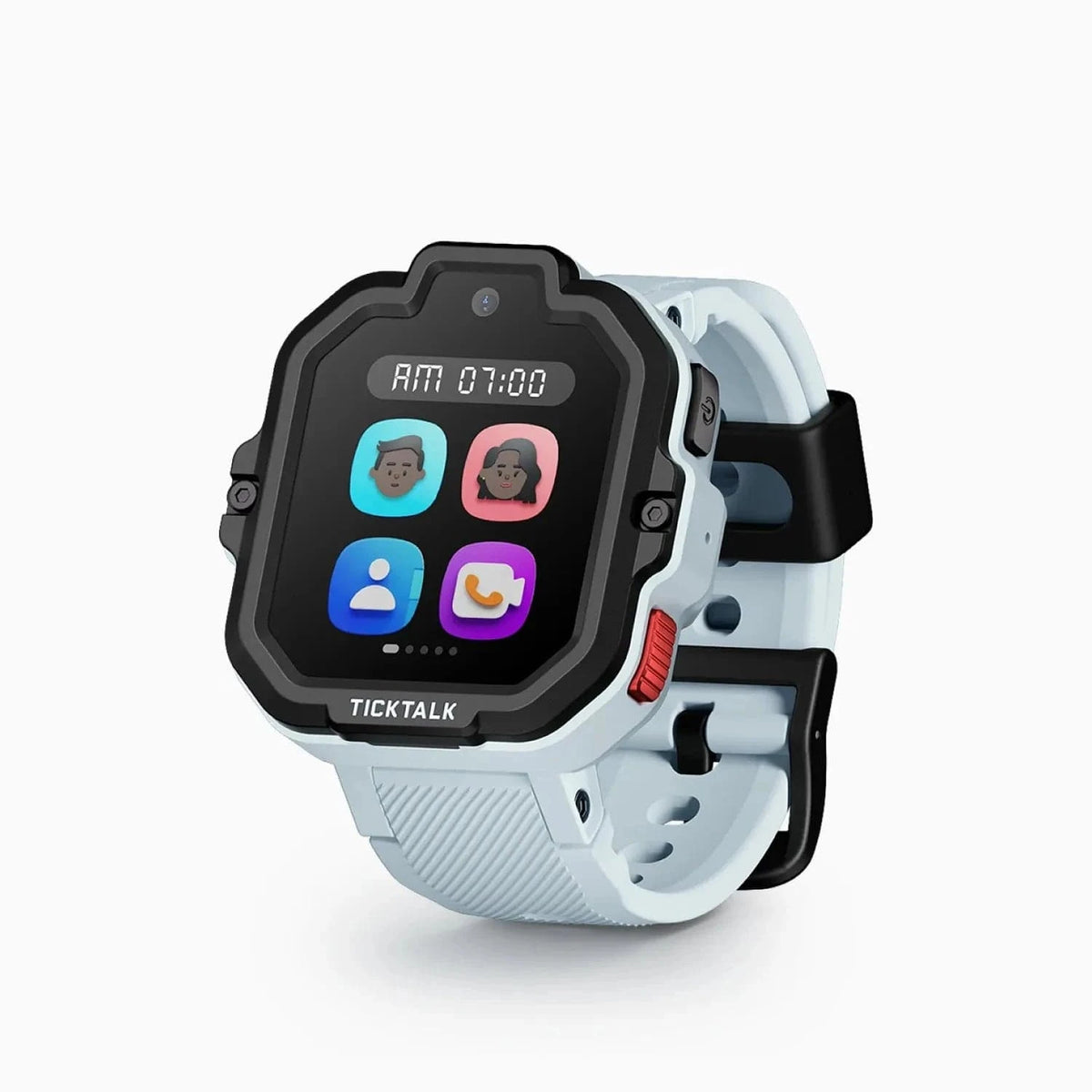
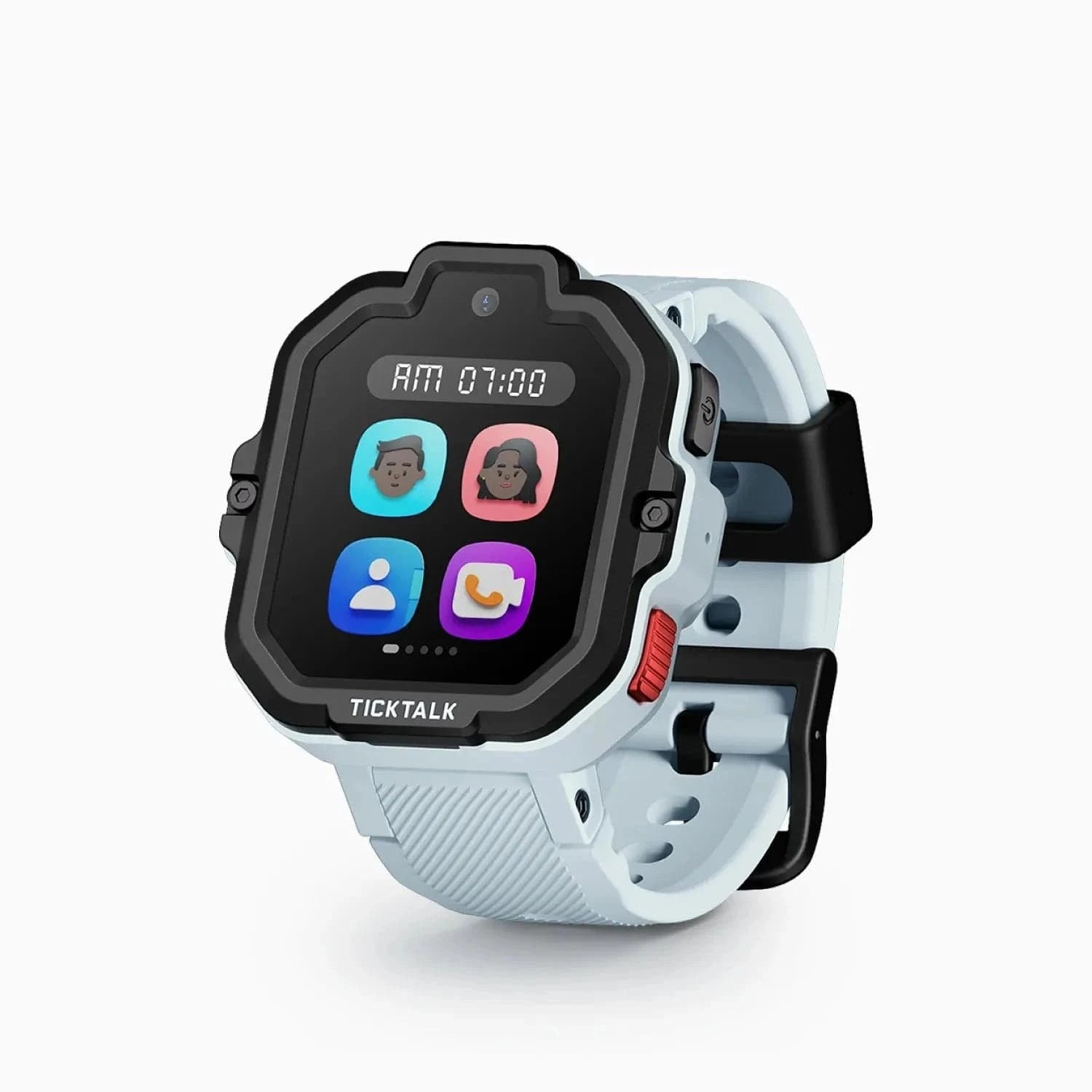
Former top pick: For spring break travel, my pick was the TickTalk 5 -- since replaced by the TickTalk 6, though it is back in stock on Amazon at $159.99 -- its 48-hour battery life is class-leading, so it survives long park days without a charger, and its AI SmartPin GPS is remarkably accurate in unfamiliar places. If you want swim-proof durability, the Garmin Bounce 2 ($299.99) is the upgrade, and for older kids the Apple Watch SE 3 ($249) adds international cellular coverage.
In a crowded theme park, a child can wander off in the few seconds it takes to check the park map. With a GPS watch, a frightening few minutes becomes a quick look at the companion app.
Vacation travel puts unique demands on these devices -- longer days without chargers, unfamiliar locations where GPS accuracy matters more than ever, water parks, beaches, airports, and the kind of chaotic, high-stimulation environments where kids tend to wander. If you want a broader look at the smartwatch landscape, our best kids smartwatches 2026 guide covers the full range of options. This guide is specifically about what works when you are away from home.
Here are the four watches that earned a spot in our carry-on luggage for spring break 2026.
At home, you know the territory. You know the walking route to school, the layout of the neighborhood park, and which neighbor's house your kid gravitates toward. You have a mental map of every place they might be. On vacation, all of that disappears.
Crowded theme parks. Unfamiliar hotel layouts. Beaches where every umbrella looks identical. Foreign cities where you do not speak the language. Airport terminals during layovers. These are environments designed to overwhelm adults, let alone a seven-year-old who just spotted an ice cream stand.
A GPS smartwatch gives you three things that matter enormously on vacation:
Real-time location tracking. You can pull up your phone and see exactly where your child is, right now, on a map. In a sprawling resort or a crowded boardwalk, this is not a luxury -- it is essential. We cover the full spectrum of tracking capabilities in our best GPS smartwatches for kids guide.
Two-way communication. Your child can call you or send a message without needing a phone. When your 10-year-old wants to ride Space Mountain for the third time while you take the younger ones to Fantasyland, a quick voice call keeps everyone connected.
Emergency SOS. Every watch on this list has an SOS button that immediately contacts designated emergency numbers and shares the GPS location. We explain how these safety features work in detail, but the short version is: one long press sends help and coordinates. On vacation, that kind of failsafe matters.
The peace of mind is real. We are not talking about helicopter parenting -- we are talking about letting your kids have more freedom in unfamiliar places because you know you can find them.
Not every kids smartwatch is a good travel companion. After multiple family trips with these devices, we have identified five features that separate a great travel watch from one that will frustrate you by day two.
This is the single most important travel spec. At home, you can charge the watch every night on a bedside table. On vacation, your routine is gone. You are out of the hotel by 8 AM and might not get back until 9 PM. If a watch dies at 3 PM while you are in the middle of a theme park, you have lost your tracking, your communication, and your SOS -- precisely when you need them most.
We look for watches that can reliably get through a full, heavy-use vacation day (12 to 14 hours) on a single charge. Anything with a rated battery life under 24 hours is a risk. Our former top pick, the TickTalk 5, consistently delivered 48-hour battery life in our testing, which means you can charge it every other evening and still have plenty of margin.
Spring break and water are inseparable. Hotel pools, water parks, beach days, even unexpected rain showers at outdoor attractions. Your child's watch needs to handle all of it. Check out our full best waterproof smartwatches for kids guide for the deep dive on water ratings, but the short version for travel planning:
For spring break, we strongly prefer 5ATM-rated watches. You do not want to be the parent yelling "take your watch off!" every time the kids head for the water.
GPS accuracy matters more on vacation than at home. At home, you know your kid is somewhere between the school building and the playground -- a 50-foot margin of error is fine. At a crowded theme park, 50 feet of error could put the blip on the wrong side of a building, the wrong ride queue, or the wrong section of a parking lot.
We tested GPS accuracy at a theme park, a beach resort, and an airport terminal. The best watches in our lineup maintained accuracy within 5 to 10 meters outdoors. Indoor accuracy -- which matters in airports, malls, and large hotel lobbies -- is harder, and we note which watches handle it better in the individual reviews below.
If you are traveling outside the United States, you need a watch that works on international networks. Most kids smartwatches use domestic cellular plans that do not include roaming. The Apple Watch SE with a cellular plan from a major U.S. carrier is the clear winner here -- it works in over 40 countries with most plans.
For domestic travel, any watch with a cellular plan (T-Mobile, AT&T, or the watch manufacturer's own plan) will work across the continental U.S. We have tested these watches from Florida to California without coverage issues.
Kids on vacation are harder on gear than kids at home. They are running more, sweating more, bumping into things, and wearing the watch for longer stretches. Silicone bands that handle sweat and sunscreen without degrading, reinforced screens that survive a bump against a roller coaster lap bar, and solid case construction all matter. Every watch on our travel list has survived at least one full family trip with our test kids.
Update (October 2026): back in stock on Amazon. TickTalk has replaced the TickTalk 5 with the TickTalk 6 and its own store is sold out, but Amazon has the TickTalk 5 in stock again at $159.99, sold by TickTalk's Amazon storefront. It is no longer our top pick: stock is finite and its successor is on pre-order. The write-up below still stands.
Price: $159.99 | Ages: 5-12 | read our TickTalk 5 review
The TickTalk 5 was our top travel pick for one reason that trumps everything else: the 48-hour battery life. No other kids smartwatch with full GPS and calling features comes close. On a theme park day where we left the hotel at 7:30 AM and returned at 9:45 PM, the TickTalk 5 still had over 50% battery remaining. That kind of endurance means you stop worrying about the watch dying and start actually enjoying your vacation.
The AI SmartPin GPS technology is the other travel standout. In our theme park testing, it maintained accuracy within 5 to 8 meters outdoors and performed better than any other kids watch we tested in semi-indoor environments like covered queue lines and open-air restaurants. When our 8-year-old wandered off toward that pretzel cart, the TickTalk 5 placed him within about 15 feet of his actual position -- accurate enough to spot him visually once we knew which direction to look.
Video calling is a feature that becomes surprisingly useful on vacation. When we split up at the theme park -- older kid on thrill rides, younger kids in the kiddie area -- a quick video call let us check in without anyone needing to walk across the park. The 5MP camera is sharp enough to actually see your child's face and their surroundings. For a thorough breakdown of everything this watch can do, read our full TickTalk 5 review.
The TickTalk 5 requires a monthly cellular plan at $9.99, which is among the most affordable in this category. Coverage is solid across the continental U.S. via T-Mobile's network. The watch is IP67-rated, which means it handles rain and splashes fine but should come off before pool time. That is the one travel compromise -- for beach and pool days, you will want to pair this with a waterproof option or simply leave it on the towel.
Why it won for travel: The combination of 48-hour battery life, accurate GPS, video calling, and a $9.99/month plan made it the most practical all-around travel companion. You will charge it once at the beginning of a two-day stretch and forget about it.
Price: $299.99 | Ages: 6-12 | Check Price on Amazon
If your spring break involves a beach, a pool, a water park, or any combination of the three, the Garmin Bounce 2 is the watch you want on your child's wrist. Its 5ATM water resistance rating means it is genuinely swim-proof -- not splash-proof, not briefly-dunkable, but designed to stay on through cannonballs, wave pools, snorkeling in shallow water, and hours of pool play.
We put the original Garmin Bounce through extensive water testing, and the Bounce 2 builds on that durability with improved GPS and a better display. Our Garmin Bounce 2 review covers the full feature set, but for travel specifically, here is what matters: the watch survived five consecutive days of pool and beach use during our testing trip without a single issue. No fogging under the glass. No touch screen glitches from water residue. No corroded charging contacts. It dried out in minutes and kept right on tracking.
Battery life is excellent at roughly two days with heavy use. On vacation, that means charging every other night, which is manageable. The GPS accuracy was strong outdoors -- within 6 to 10 meters at the beach resort -- though it struggled slightly more in dense indoor environments like large hotel lobbies.
The fitness and activity tracking features are a bonus on vacation. Our test kids were fascinated by their step counts at the theme park ("Dad, we walked TWELVE THOUSAND steps!"), and the Garmin Jr. app gave us a fun way to review each day's activities back at the hotel.
The downsides for travel: no video calling (you get voice calls and text messaging only), and the $299.99 price tag is the highest on this list. If your spring break is pool- and beach-heavy, though, the Garmin Bounce 2 is worth every penny because you never have to think about water damage.
Why it wins for water travel: True 5ATM swim-proof rating means it stays on your child's wrist all day -- pool, ocean, water slides, and everything in between. The Apple Watch SE and Fitbit Ace LTE are swim-rated too, but neither matches the Bounce 2's rugged build and two-day battery for a full day in the water.
Price: $249.00 | Ages: 10+ | Check Price on Amazon
If your spring break takes you outside the United States -- Mexico, the Caribbean, Europe, or anywhere else -- the Apple Watch SE is the only kids smartwatch on this list that reliably works internationally. With a cellular plan from AT&T, T-Mobile, or Verizon, you get roaming coverage in dozens of countries, which means GPS tracking, calling, and SOS all continue to work when you land.
We tested the Apple Watch SE on a trip to Cancun and it worked flawlessly from the moment we cleared customs. GPS tracking was accurate, calls connected without delay, and the Find My integration through the parent's iPhone made locating our 11-year-old tester effortless -- even inside the resort's sprawling lobby and restaurant complex, where other watches tend to lose accuracy.
For families already in the Apple ecosystem, the setup through Family Setup is straightforward, and our Apple Watch SE for kids guide walks through the entire process. The fall detection and emergency SOS features add a layer of safety that is particularly reassuring in unfamiliar environments. If your child takes a tumble on a hike or at a resort activity, the watch can automatically alert you and share coordinates.
The WR50 water resistance rating means it handles pool and beach use well, though we would still remove it for high-pressure water park slides as a precaution. Battery life is the weakest point -- expect 18 to 24 hours depending on usage. On a long vacation day, you will want to top it off during downtime (lunch break, pool lounging) to ensure it lasts until bedtime.
The other consideration: this watch requires an iPhone in the family and costs more when you factor in the watch price plus the cellular plan add-on (typically $10 to $15 per month depending on your carrier). For international travel, though, no other kids watch comes close.
Why it wins for international travel: It is the only kids GPS watch that works reliably outside the U.S. without swapping SIM cards or buying local plans. If you are leaving the country, this is your pick.
Price: $159.99 | Ages: 7-12 | Check Price on Amazon
If your spring break involves hiking, biking, kayaking, or anything more active than lounging by the pool, the Fitbit Ace LTE is built for it. This watch combines GPS tracking and cellular communication with Fitbit's best-in-class activity tracking, which makes it ideal for families who plan adventure-heavy vacations.
Our Fitbit Ace LTE review covers the full feature set, but the travel highlights are compelling. The activity tracking gamifies movement in a way that our test kids genuinely responded to -- the animated "eejies" on screen react to how active the child is, and our 8-year-old tester was borderline obsessed with hitting his movement goals during our hiking trip. Instead of "are we there yet," we got "how many more steps until my eejie evolves?"
GPS accuracy was solid at 6 to 10 meters outdoors, and the LTE connectivity through Google Fi means reliable coverage across the U.S. The SOS feature works well, and the companion app gives parents a clean dashboard for location tracking and geofence alerts.
Water resistance is rated at 5ATM, so it handles swimming and water activities confidently. Battery life runs about a day and a half with moderate use, which is adequate but not exceptional for travel. You will need to charge nightly on heavy-use vacation days.
The watch face is designed to look like a regular kids watch rather than a tech gadget, which is a plus for families who want functionality without drawing attention to an expensive device on their child's wrist.
Why it wins for active vacations: The combination of Fitbit's activity tracking, 5ATM water resistance, and LTE connectivity makes it the best choice for families who plan active, outdoor spring break trips.
Buying the right watch is step one. Using it effectively on vacation takes a little preparation. Here are the practical tips we have learned from multiple trips with GPS watches on our test kids.
Do not rely on a single nightly charge. Pack the charging cable in your day bag, not in the checked luggage. Many theme parks have charging stations or outlets near dining areas. A 30-minute top-off during lunch can add enough battery to get through the rest of the day comfortably. We always carry a small power bank in our park bag specifically for watch charging.
Most companion apps let you set geofences -- virtual boundaries that send you an alert when your child enters or leaves a defined area. Set these up for your hotel, the resort grounds, and any specific areas you plan to visit repeatedly. We set a geofence around our hotel pool area so we knew the moment our kids left that zone during free time. Setting up geofences is straightforward once you know the app -- our how to set up kids smartwatch guide walks through the process for every major watch brand.
Before you leave home, update the watch's emergency contacts to include:
Make sure your child knows how to use the SOS button. We do a practice run with our test kids before every trip. It takes ten seconds and could matter enormously in an actual emergency.
Watches can die, get lost, or malfunction. Before you leave for any outing, establish a physical meeting point that your child can identify -- "If we get separated, go to the big fountain near the entrance and wait there." A smartwatch is a powerful tool, but it should supplement a plan, not replace one.
This is one most parents do not think about. Sunscreen can degrade silicone watch bands and gum up charging contacts. Apply sunscreen first, let it absorb for a few minutes, then put the watch on. At the end of the day, rinse the watch and band with fresh water to remove any residue. This simple habit will keep the watch functioning and comfortable all week.
Airports and theme parks are the two environments where a GPS watch proves its value most dramatically. Here is how to get the most out of your watch in each setting.
Airports are large, confusing, and full of distractions. Our test kids are fascinated by airport shops, moving walkways, and the window views of planes taxiing. That fascination has led to more than one "where did he go?" moment during layovers.
Set a geofence around your gate area. Most companion apps update quickly enough that you will get an alert within a minute or two if your child wanders out of the gate zone. During a two-hour layover at Dallas-Fort Worth, our 8-year-old decided to explore the terminal on his own and made it about 150 feet before the geofence alert hit our phone. We called him on the watch and had him back in two minutes.
Keep the watch charged during flights. Most airlines allow smartwatches to remain on in airplane mode. Switch to airplane mode before takeoff (the companion app should have this option) and switch back when you land. This preserves battery and avoids any issues with flight attendants.
Use the watch as a communication tool during connections. If your family gets split up during boarding or deplaning -- and with kids, it happens -- a quick call on the watch eliminates the stress of scanning a crowd.
Theme parks are where GPS watches truly shine. We have tested watches at three major Florida parks and two regional parks, and here is what works.
Check the park map and identify meeting points first. Program the park's guest services or first aid location as a meeting point for your family. If your child can read and operate the watch, teach them to call you from that location if separated.
GPS accuracy varies by park area. Open outdoor areas track well. Covered queue lines, indoor rides, and dense building clusters can cause GPS drift. Do not panic if the blip shows your child 50 feet from their actual position in a crowded indoor area -- that is normal. Wait a minute for the signal to update, or call them directly.
Split up confidently with older kids. For families with mixed-age kids, a GPS watch lets your 11-year-old ride the big coasters independently while you handle the younger crew. Set check-in times ("call us at noon and at 3 PM") and a spending limit if the watch has any payment features. This was our favorite use case during testing -- it gave our older tester genuine independence while keeping us connected.
Watch for "dead zones." Some park areas, especially underground queues and heavily shielded indoor attractions, will temporarily lose GPS signal. The watch will reconnect once your child is back outdoors. This is not a malfunction -- it is a limitation of GPS technology in those environments.
| Feature | TickTalk 5 | Garmin Bounce 2 | Apple Watch SE | Fitbit Ace LTE |
|---|---|---|---|---|
| Price | $159.99 | $299.99 | $249.00 | $159.99 |
| Age Range | 5-12 | 6-12 | 10+ | 7-12 |
| Battery Life | ~48 hours | ~2 days | 18-24 hours | ~1.5 days |
| Water Rating | IP67 | 5ATM | WR50 | 5ATM |
| Swim-Proof | No | Yes | Yes | Yes |
| GPS Accuracy | 5-8m | 6-10m | 3-5m | 6-10m |
| Video Calling | Yes | No | No | No |
| Voice Calling | Yes | Yes | Yes | Yes |
| International Use | No | No | Yes | No |
| Monthly Plan | $9.99 | $9.99 | $10-15 | Included (1yr) |
| SOS Button | Yes | Yes | Yes | Yes |
| Best For | Former top pick (previous gen) | Beach/pool trips | International | Active vacations |
There is no single perfect travel watch because spring break means different things to different families. A beach week in Florida has different demands than a ski trip to Colorado or a cultural tour through Europe.
Here is our straightforward recommendation:
Whatever you choose, the most important thing is to set it up and test it before you leave home. Charge it, configure the geofences, program the emergency contacts, and do a practice SOS call with your child. Five minutes of prep at home saves real anxiety on the road. And if you are already thinking ahead to summer, our best kids smartwatches for summer camp 2026 guide covers what works best when your child is away for days or weeks at a time.
Have a safe and connected spring break. And if you want to save a few dollars before your trip, our deals page has the latest pricing on every watch mentioned here.
Most kids GPS watches will not work reliably on a cruise ship while at sea. Cellular-based GPS watches (TickTalk, Garmin Bounce, Fitbit Ace LTE) lose signal once you are away from shore because there are no cell towers in the ocean. The Apple Watch SE may work if your cruise ship has supported cellular infrastructure, but coverage is inconsistent and often expensive. When the ship is docked at a port, your watch should reconnect to local cell networks. For at-sea use, we recommend relying on the ship's own kids tracking programs and establishing physical meeting points with your children.
Yes -- all four watches on our list work well at major theme parks. GPS tracking is generally accurate in outdoor areas (walkways, open queue lines, food courts) and less reliable in enclosed spaces (indoor rides, underground queues, heavily shielded buildings). Cellular coverage at major parks like Disney World, Universal Studios, and Six Flags is strong because the parks have excellent cell tower infrastructure. We tested at three Florida parks and had zero cellular connectivity issues with any watch.
If your child already wears a GPS smartwatch daily, use that one. Familiarity matters -- your child knows how to operate it, your geofences and contacts are already configured, and you have tested it in real conditions. Buying a new watch specifically for a one-week trip is only worth it if your current watch has a specific limitation that matters for your trip (like needing international coverage or swim-proof water resistance that your current watch lacks). If you are buying your first kids smartwatch and want something versatile enough for both daily use and travel, our best kids smartwatches 2026 roundup can help you find the right fit.
Pack the watch's charging cable and a portable power bank in your day bag. Most kids watches can gain several hours of battery from a 20- to 30-minute charge. We plug in during sit-down meals, show performances, or any other downtime. If your child's watch has a magnetic charging puck (like the Apple Watch SE), it is easy to charge discreetly even while walking -- just hold the charger against the watch face while the child wears it and connect it to the power bank in your bag. For watches with cradle-style chargers, lunch breaks are your best window.
Absolutely, and we strongly recommend it. Most companion apps let you create, modify, and delete geofences directly from your phone. When you arrive at your hotel or resort, open the app and set a geofence around the property. Add another around the pool area if the app supports multiple zones. At theme parks, you can set a geofence around the main park area so you are alerted if your child somehow exits the grounds. These temporary geofences take about 30 seconds to create and can be deleted when you return home. Our how to set up kids smartwatch guide includes step-by-step geofence instructions for every major brand.
First, use the companion app to check the last known GPS location. Most apps retain location history, so even if the watch battery has died, you can see where it last reported. For the Apple Watch SE, the Find My network can help locate it even when the battery is dead thanks to the U1 chip. Second, report the lost item to guest services -- theme parks and resorts have robust lost-and-found systems, and a GPS watch is distinctive enough that staff can often locate it quickly. Third, if loss is a real concern, a mid-priced watch like the TickTalk 5 stings less than losing a $300 device such as the Apple Watch SE. Finally, consider adding a small luggage tag or label with your phone number to the watch band as a low-tech backup.
Are kids smartwatches worth it? After years of testing, here's the honest answer — when they're absolutely worth the money, when they're not, and the real costs.
What age should a kid get a smartwatch? The honest answer is 5-12 for GPS watches — but readiness matters more than the number. Here's how to decide, by age.
TickTalk 6 pre-orders are open at $169.99; TickTalk now expects to ship by October 5, 2026. Here are the full published specs, the monthly plan cost nobody mentions, and the eSIM change that ends bring-your-own-SIM.
The best kids smartwatches that work on AT&T in 2026 -- my top picks (Xplora X6Play, Apple Watch SE), a cheaper MVNO trick, and which watches skip AT&T entirely.
The best kids smartwatches that work on T-Mobile in 2026 -- why T-Mobile has the broadest compatibility, my top BYO-SIM picks, plus cheaper MVNO options like Mint Mobile.
New review alerts, deal drops, and seasonal buying guides — delivered weekly. No spam, unsubscribe anytime.
No spam. Unsubscribe anytime.