Safety Guides|
Smartwatch vs Phone for Kids: A Parent's Safety Guide (2026)
Should your child get a smartwatch or a phone? We break down safety, screen time, GPS tracking, costs, and age-appropriateness to help you decide.
Parents worry about EMF radiation, GPS tracking privacy, hacking risks, and screen time. We break down the real safety concerns with kids smartwatches and what the research actually says.
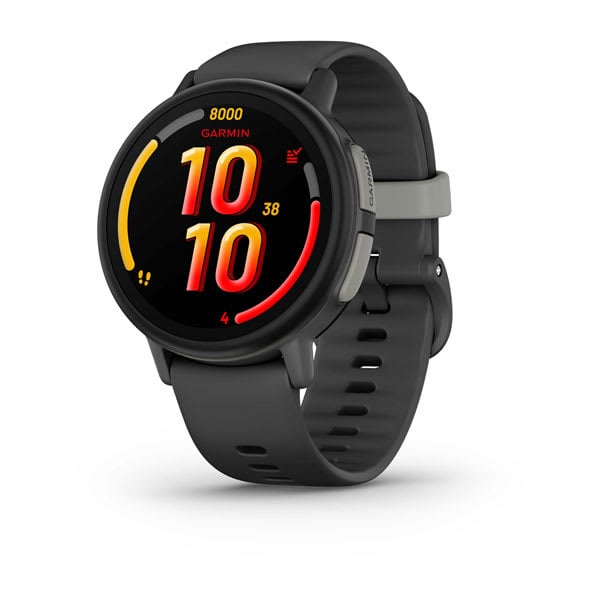
Garmin Bounce 2
$299.99
Affiliate Disclosure: This article contains affiliate links. If you purchase through our links, we may earn a small commission at no extra cost to you. We only recommend products we have personally tested and believe in. Our opinions are our own and are not influenced by any affiliate partnerships.
I get this question more than any other. More than "which watch has the best GPS?" More than "is the monthly plan worth it?" The question parents really want answered before they spend a dime is simple: is strapping a smartwatch to my kid's wrist actually safe?
And honestly, it is a fair question. You are putting a wireless, internet-connected, GPS-tracking device on your child. Of course you want to know if that is a good idea. I would question the judgment of any parent who did not pause and think about it.
When I started this site, I had the same concerns. I read the scary headlines about hacked watches, radiation fears, and privacy nightmares. I went down the rabbit hole so you would not have to. What I found is that the answer is not a simple yes or no. It depends entirely on which watch you buy, which brand made it, and how you set it up.
The good news? If you choose a reputable brand and follow some basic guidelines, kids smartwatches are not just safe — they can actively make your child safer. The bad news? There are cheap, no-name watches out there that genuinely deserve the scary headlines. This article will help you tell the difference.
Let me walk you through every major safety concern, what the evidence actually says, and what to look for when you are shopping.
This is the big one. The concern that keeps parents up at night. If a smartwatch is transmitting wireless signals from my kid's wrist, is it bathing them in harmful radiation?
Here is what you need to know.
Every wireless device sold in the United States must comply with FCC radiation limits. The measurement used is called SAR, which stands for Specific Absorption Rate. It measures how much radio frequency energy is absorbed by the body when using a wireless device. The FCC sets strict limits on SAR levels, and every kids smartwatch sold by a reputable brand in the US has been tested and certified to fall well within those limits.
Here is the part that often gets lost in the fear: a kids smartwatch produces significantly less RF energy than a smartphone. When your child holds a phone to their head to make a call, the antenna is pressed right against their skull. A watch sits on the wrist, which is much further from the brain, and it transmits at considerably lower power levels than a phone. The SAR values for kids smartwatches are typically a fraction of what a smartphone produces.
European safety bodies have conducted extensive reviews of RF exposure from wearable devices. The consensus from these studies is that devices operating within established safety limits — which all FCC-certified watches do — do not pose a known health risk. The European Commission's Scientific Committee on Health, Environmental and Emerging Risks has reviewed the available evidence and has not found cause to lower existing exposure limits for wearable devices.
Does that mean there is zero risk? Science does not work that way. Long-term studies on wearable devices specifically worn by children are still ongoing. But based on everything we know right now, a certified kids smartwatch worn on the wrist exposes your child to far less RF energy than the phone you probably hand them to watch YouTube.
My practical advice: If EMF exposure is a concern for you, a kids smartwatch is actually a better choice than giving your child a smartphone. Less power output, worn on the wrist instead of held against the head, and most kids watches are not being used for hours of continuous streaming the way phones are.
The second big concern parents raise is about the GPS data itself. If the watch is constantly tracking my child's location, where does that data go? Who has access to it? Could someone use it to find my kid?
These are smart questions, and the answers vary dramatically by brand.
How GPS data works on a kids smartwatch:
When your child's watch records their location, that data is sent from the watch to the company's servers via an encrypted cellular connection. From there, it is displayed in the companion parent app on your phone. The security chain has three links: the watch itself, the data transmission, and the company's servers.
Reputable brands encrypt all three links. The data leaving the watch is encrypted. The connection to the servers uses secure protocols. And the servers themselves are protected by standard cybersecurity practices. Only the parent accounts linked to the watch can view the child's location.
Some brands go further than others on privacy:
Garmin has a long track record in the wearable space and applies the same enterprise-level security infrastructure to the Bounce 2 that it uses across its entire product line. Location data is encrypted end-to-end, and Garmin's privacy policy is transparent about what data is collected and how it is used.
Bark built the Bark Watch with privacy as a core design principle. Bark has been in the digital safety space for years and has a strong reputation for protecting family data. Their approach is specifically designed around child safety, not data monetization.
What to watch out for: The privacy risks are real with unknown brands. Some cheap smartwatches from unrecognized manufacturers have been found to transmit location data without proper encryption, or to store data on servers with inadequate security. In some cases, the companion apps have requested permissions far beyond what is needed to operate the watch.
My practical advice: Stick with brands you have heard of. Read the privacy policy. If the watch comes from a company with no website, no clear privacy documentation, and a price that seems too good to be true, your child's location data may not be handled with the care it deserves. I cover the best options in our best kids smartwatches for 2026 roundup.
If you have ever Googled "kids smartwatch safety," you have probably seen the headlines about hacked watches. Let me give you the full picture, because context matters enormously here.
The 2019 incident that started the panic:
In 2019, the European Commission issued a recall on certain cheap, unbranded kids smartwatches sold primarily through low-cost online marketplaces. Security researchers found that these watches had virtually no security at all. The companion apps used unencrypted connections, making it possible for someone to intercept location data, listen through the watch's microphone, or even send messages to the child. It was a genuine safety failure, and the recall was absolutely warranted.
But here is what those headlines leave out: The watches that were recalled were bottom-tier products from unknown manufacturers with no security infrastructure whatsoever. They were not products from TickTalk, Garmin, Gabb, Bark, or any other established brand in this space.
How major brands protect against hacking:
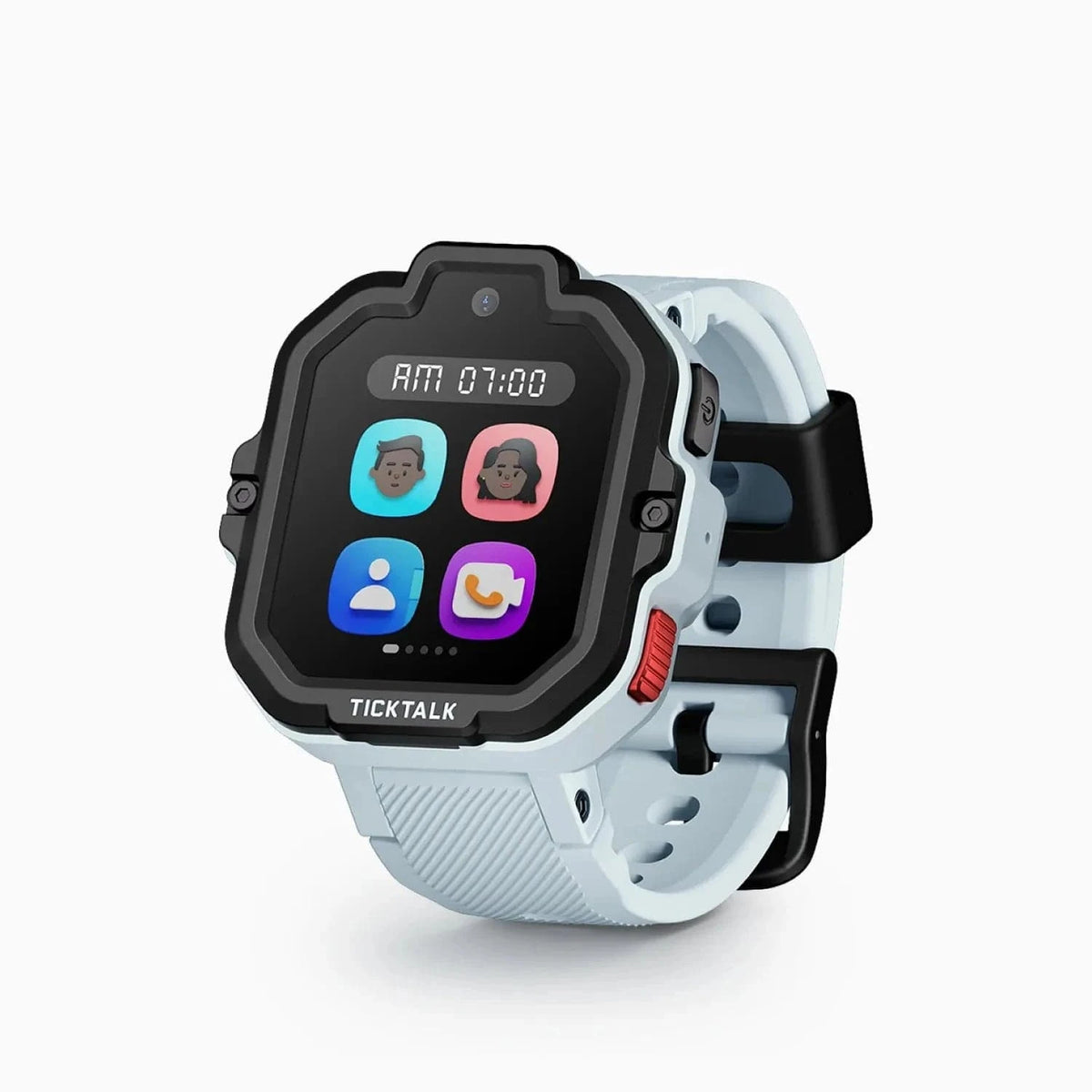
The TickTalk 5 uses encrypted data connections and requires all contacts to be approved through the parent app before they can communicate with the child. There is no way for a stranger to call or message the watch unless a parent has explicitly added them to the approved contact list.
Garmin applies the same security protocols it uses for its aviation, marine, and fitness products to the Bounce 2. These are not startup-level security measures. This is a company that builds navigation systems for aircraft.
Gabb designed the Watch 3e with a whitelisted contact system and a locked-down operating environment. The watch does not have an open app store, a web browser, or any pathway for a stranger to reach your child through the device.
Can a determined, sophisticated attacker theoretically compromise any connected device? In theory, yes. That applies to your phone, your laptop, your home Wi-Fi router, and your car. But the risk of a security breach on a reputable kids smartwatch is no higher than any other consumer electronics device in your home, and it is vastly lower than the risk posed by giving a child an unrestricted smartphone with access to the open internet.
My practical advice: The 2019 recall was a wake-up call for the industry, and reputable brands responded by doubling down on security. Do not buy the cheapest watch you can find on a marketplace from a brand you have never heard of. Stick with established companies, and this concern largely takes care of itself. For more on what safety features to look for, check out our kids smartwatch safety features explained guide.
I hear this one a lot from parents who are already fighting the screen time battle with tablets and phones: "If I get my kid a smartwatch, am I just adding another screen to the problem?"
Here is why kids smartwatches are fundamentally different from phones and tablets.
Most kids smartwatches have very limited screens. There is no YouTube. There is no TikTok. There is no web browser. There is no app store filled with addictive games. The screen on a kids smartwatch is small by design, and the functionality is intentionally restricted. Your child can make calls, send short messages, check the time, and maybe track their steps. That is about it.
Some brands have made distraction-free design their entire identity:
Gabb built the Watch 3e around the philosophy that kids need communication tools, not entertainment devices. There are no games, no social media, and no internet access. It is a watch that makes calls and sends texts to approved contacts. Period.
Bark designed the Bark Watch with the same distraction-free approach. Bark spent years building parental control software before creating their watch, so they understand the screen time problem better than most. Their watch gives kids the independence to communicate without the addictive elements that make smartphones problematic.
The screen time comparison is not even close. Studies on children's screen time concerns are focused on devices that deliver infinite, algorithmically curated content streams — smartphones, tablets, and computers. A kids smartwatch with a 1.4-inch screen that can display a contact list and a step counter is not in the same category. It is closer to giving your child a basic wristwatch that can also make phone calls.
My practical advice: If screen time is a concern — and it should be — a kids smartwatch is the solution, not the problem. It gives your child the ability to reach you without handing them a portal to the entire internet. For more on why a watch might be better than a phone, read our smartwatch vs phone for kids comparison.
Can a stranger call or text my child through their smartwatch? This is the question that hits closest to home for most parents, and fortunately, it is the one with the most reassuring answer.
Every reputable kids smartwatch uses a whitelisted contact system. This means the only people who can call or message your child through the watch are people you have explicitly approved in the parent app. No one else can reach them. Not a wrong number, not a telemarketer, not a stranger.
Here is how the whitelisted contact system works on most watches:
On top of the whitelisted contact system, most kids smartwatches include an SOS button. When pressed, the watch automatically calls the parent's phone and, on many models, sends the child's GPS location. Some watches cycle through a list of emergency contacts if the first one does not answer.
The combination of whitelisted contacts and SOS functionality means your child has a direct line to you and your approved contacts, and absolutely no one else can reach them through the device.
This is one of the areas where kids smartwatches are genuinely safer than smartphones. A phone can receive calls and texts from anyone. It has a web browser where strangers can interact with your child through social media, games, and chat apps. A kids smartwatch eliminates all of those pathways.
Based on everything I have tested and researched, here is your safety checklist when shopping for a kids smartwatch:
Must-haves:
Nice-to-haves:
For watches that do not require a monthly plan, see our best kids smartwatches with no monthly fee guide.
Based on our testing, here are the kids smartwatches that score highest on overall safety:
Garmin Bounce 2 — Best Overall for Safety-Conscious Parents Garmin brings enterprise-grade security to a kids watch. End-to-end encryption, excellent GPS accuracy, whitelisted contacts, and a rock-solid companion app. It is the most expensive option, but you are paying for Garmin's security infrastructure. $299.99 on Amazon
TickTalk 5 — Best Balance of Features and Security Encrypted communications, approved contact lists, video calling, and a strong parental control app. TickTalk has been in this space for multiple generations and takes security seriously. $159.99 on Amazon
Bark Watch — Best for Privacy-First Families Built by a company that has spent years in the child digital safety space. Distraction-free design, no games, no internet access, strong privacy practices. $149 at Bark
Gabb Watch 3e — Best for Distraction-Free Safety No internet, no games, no social media. Just calls, texts, and GPS tracking with a locked-down contact list. Gabb's entire philosophy is built around keeping kids safe from digital overload. $149.99 on Amazon
For the full breakdown of our top picks across all categories, check out our best kids smartwatches for 2026 guide.
Kids smartwatches emit radio frequency energy, but at levels far below FCC safety limits. The SAR levels for a watch worn on the wrist are significantly lower than those of a smartphone held against the head. Based on current research, there is no established health risk from wearing an FCC-certified kids smartwatch.
Not on reputable brands. Watches from companies like Garmin, TickTalk, Gabb, and Bark use whitelisted contact systems where only parent-approved numbers can call or message the watch. Strangers cannot reach your child through the device.
Not always. The major safety concerns — hacking, unencrypted data, privacy violations — are almost exclusively associated with cheap, unbranded watches from unknown manufacturers. Stick with established brands that have clear privacy policies and FCC certification. The 2019 EU recall of unsafe kids watches specifically targeted low-cost, no-name products.
In most ways, yes. A kids smartwatch has no web browser, no social media, no app store, and no pathway for strangers to contact your child outside of the approved contact list. A smartphone has all of those things. For younger kids especially, a smartwatch provides the communication and location tracking parents want without the risks that come with unrestricted internet access. We break this down in detail in our smartwatch vs phone comparison.
Based on our testing, the Garmin Bounce 2 offers the strongest overall safety profile thanks to Garmin's enterprise-level encryption and security infrastructure. For families who prioritize privacy and distraction-free design, the Bark Watch and Gabb Watch 3e are also excellent choices. The best watch for your family depends on your specific priorities — check our complete 2026 guide for detailed comparisons.
This guide covers physical and behavioral safety. For the separate question of data privacy — what these watches collect, who can see it, and whether they can be hacked — see are kids smartwatches secure?. And if locking down contacts, screen hours, and content is your main concern, our best kids smartwatches for parental controls roundup ranks watches on exactly that.
Should your child get a smartwatch or a phone? We break down safety, screen time, GPS tracking, costs, and age-appropriateness to help you decide.
Can a kids smartwatch be hacked? How private is your child's location data? An honest look at kids smartwatch security, privacy, and how to choose a safe one.
GPS, geofencing, SOS buttons, safe zones — we rank every safety feature in kids smartwatches by what actually keeps your child safe, and which ones are marketing fluff.
The best kids smartwatches that don't connect to the internet. GPS tracking and calling without web browsing, social media, or online risks.
TickTalk 6 pre-orders are open at $169.99, shipping by the end of September 2026. Here are the full published specs, the monthly plan cost nobody mentions, and the eSIM change that ends bring-your-own-SIM.
New review alerts, deal drops, and seasonal buying guides — delivered weekly. No spam, unsubscribe anytime.
No spam. Unsubscribe anytime.